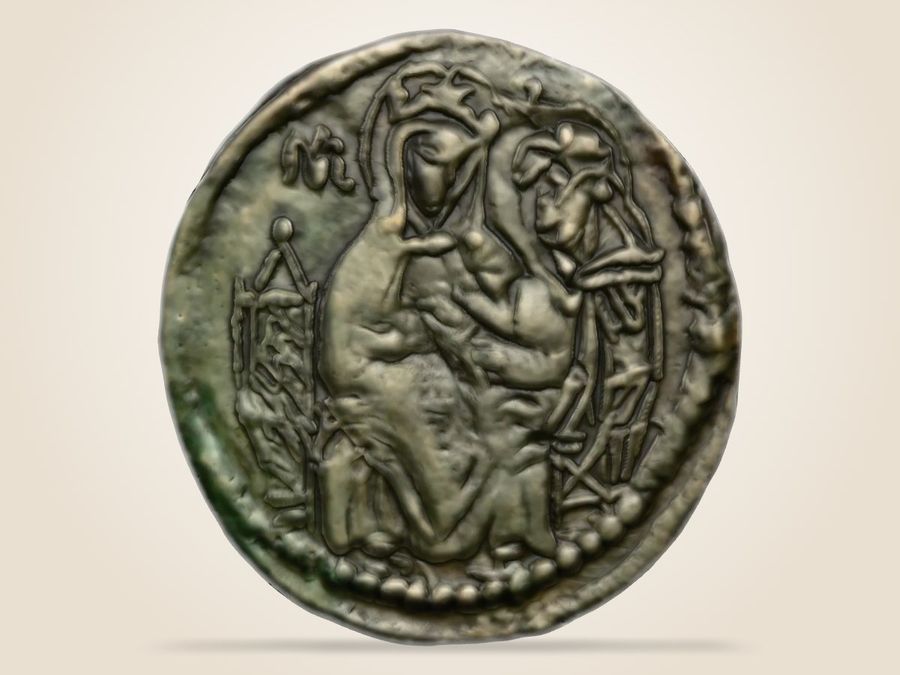
Follaro of Ulcinj — the Virgin and the Lamb of God
Ulcinjski folar — Bogorodica i Božije jagnje
Drag to rotate · scroll to zoomDrag to rotate · pinch to zoom
loads {mb} MBObjects that were not scanned but reconstructed: the Old Town as a 3D model from open spatial data and, from photographs, the figurine Diva Rumina of Ulcinj, an anthropomorphic slab figurine of fired clay and the oldest object in the collection, a gem with the head of Athena from the 4th–3rd century BC, a side of the 9th-century ciborium (National Museum in Belgrade), the plaque with the IHS monogram in the Old Town, coins of Illyrian kings and cities, of medieval Ulcinj and Svač and of the Roman Empire, and finally an Illyrian-type helmet as a sample. A reconstruction is not identical to the original: shape, ornament and dimensions may differ. An exact model will come from 3D scanning the original, and for the town from a drone or lidar survey.
Description
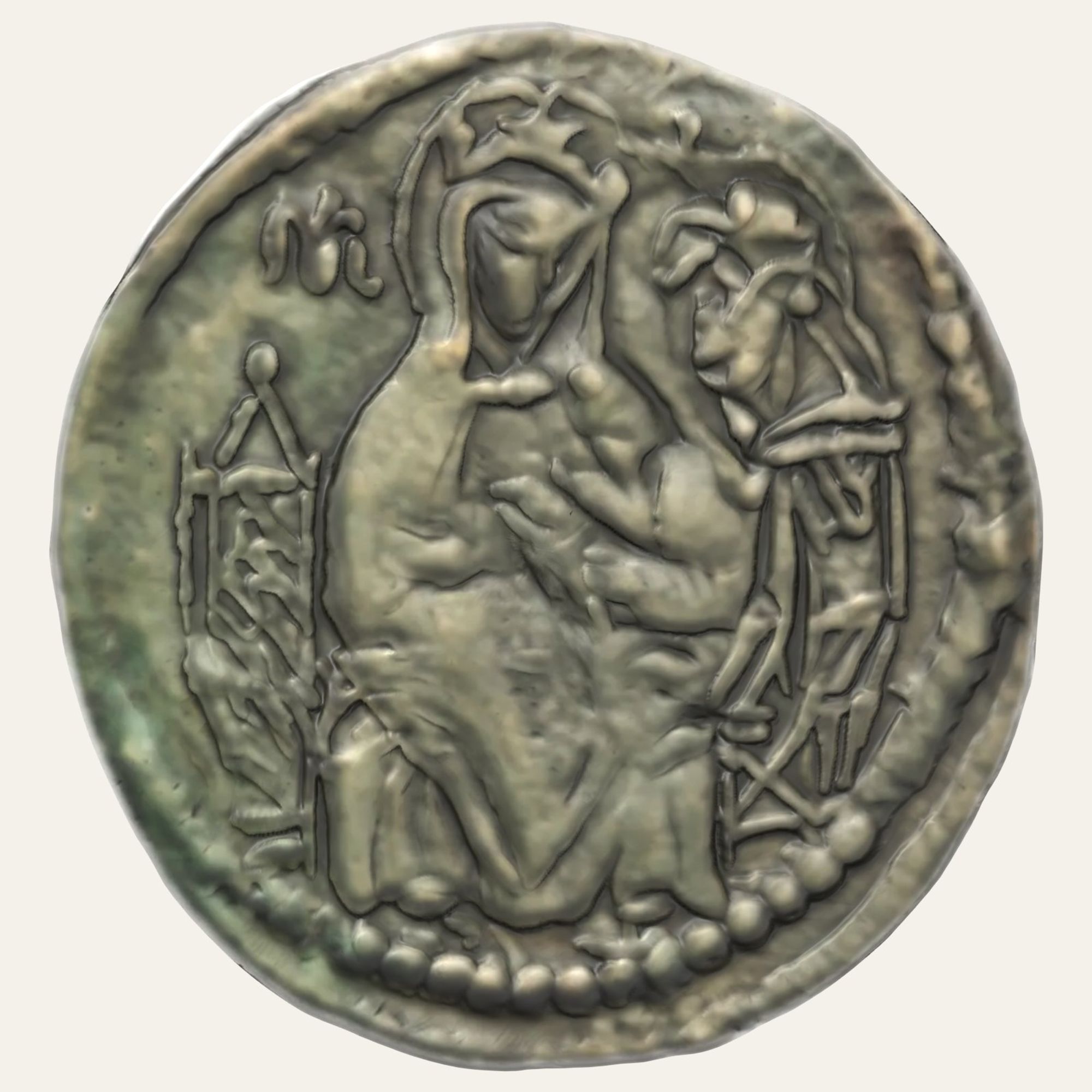
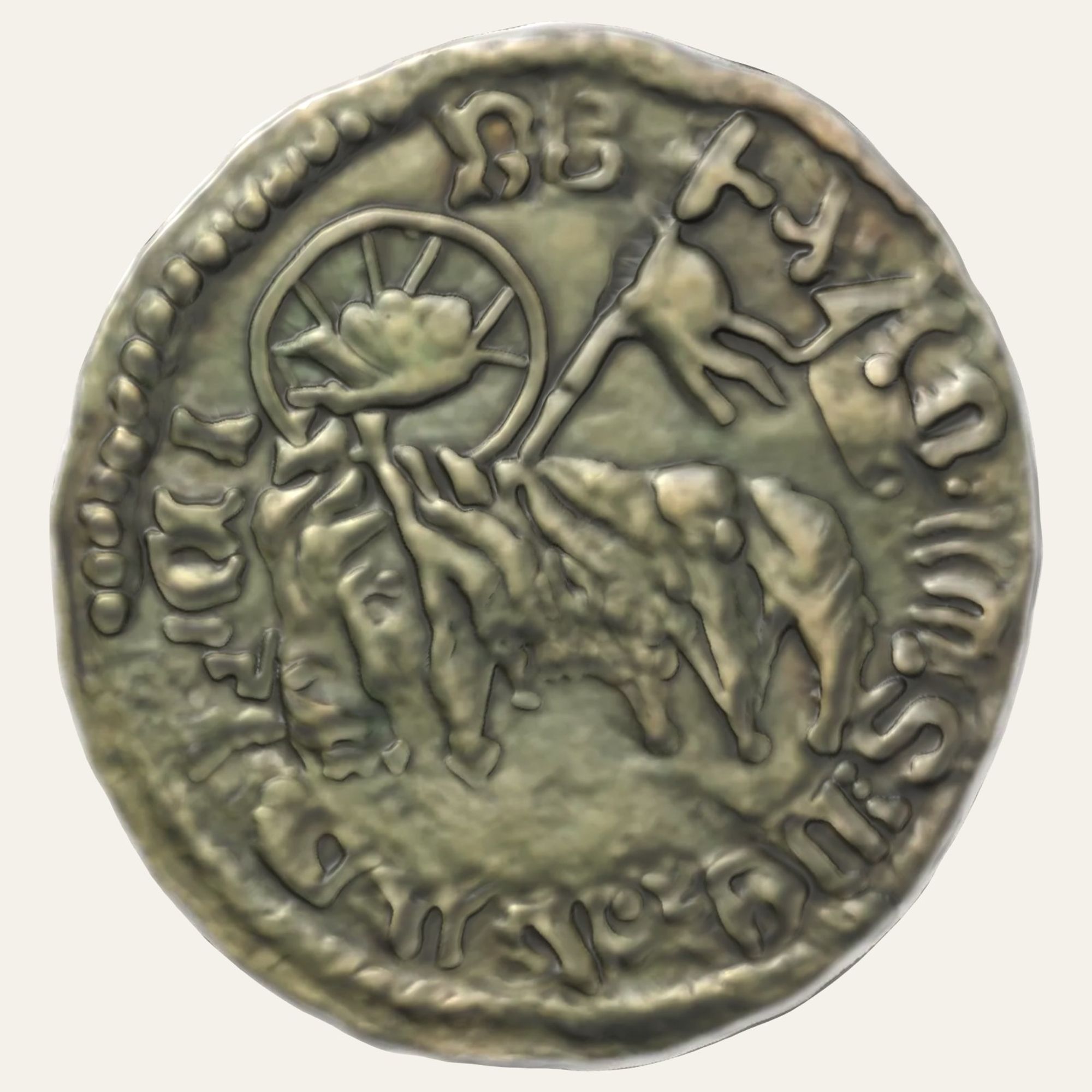
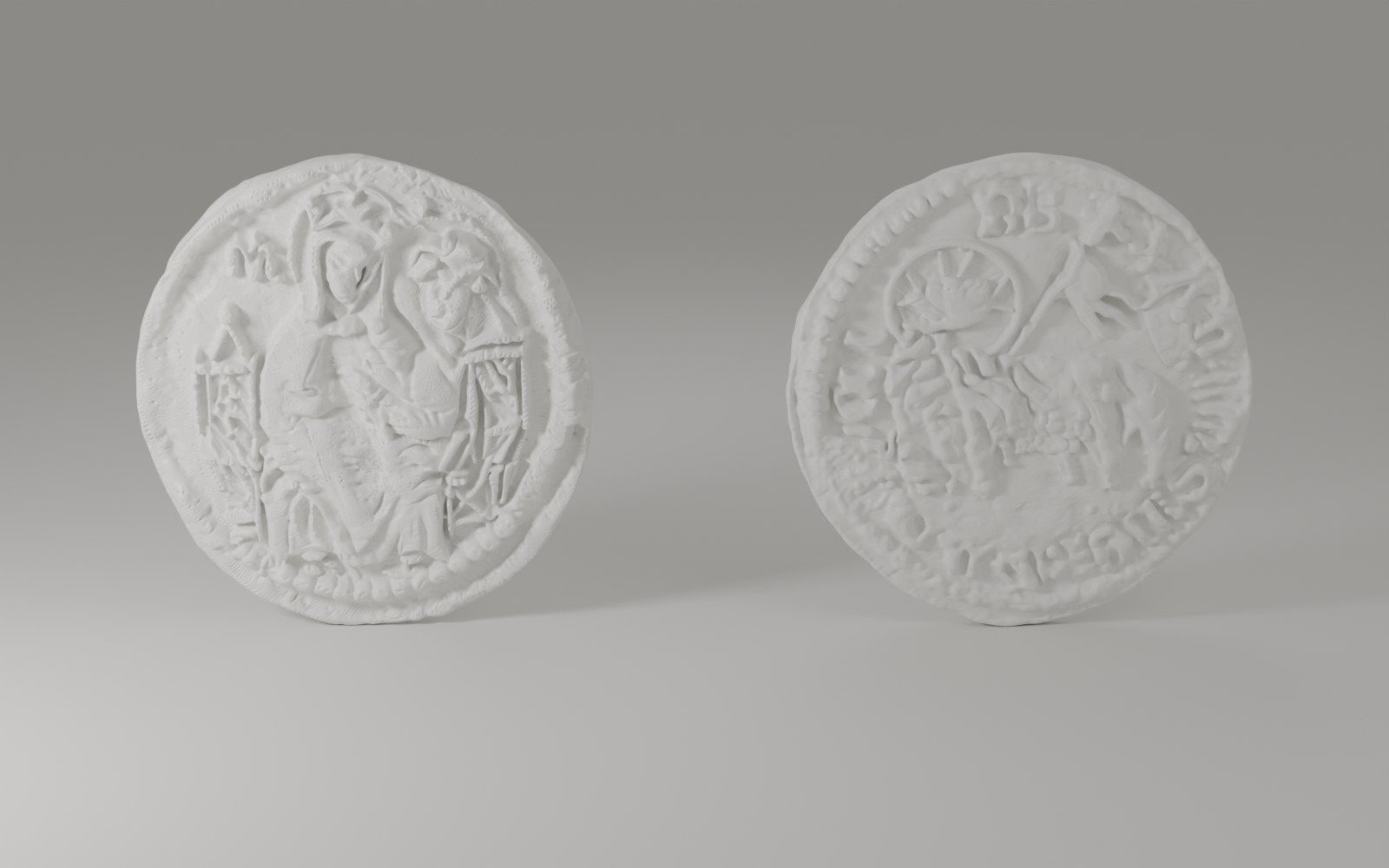
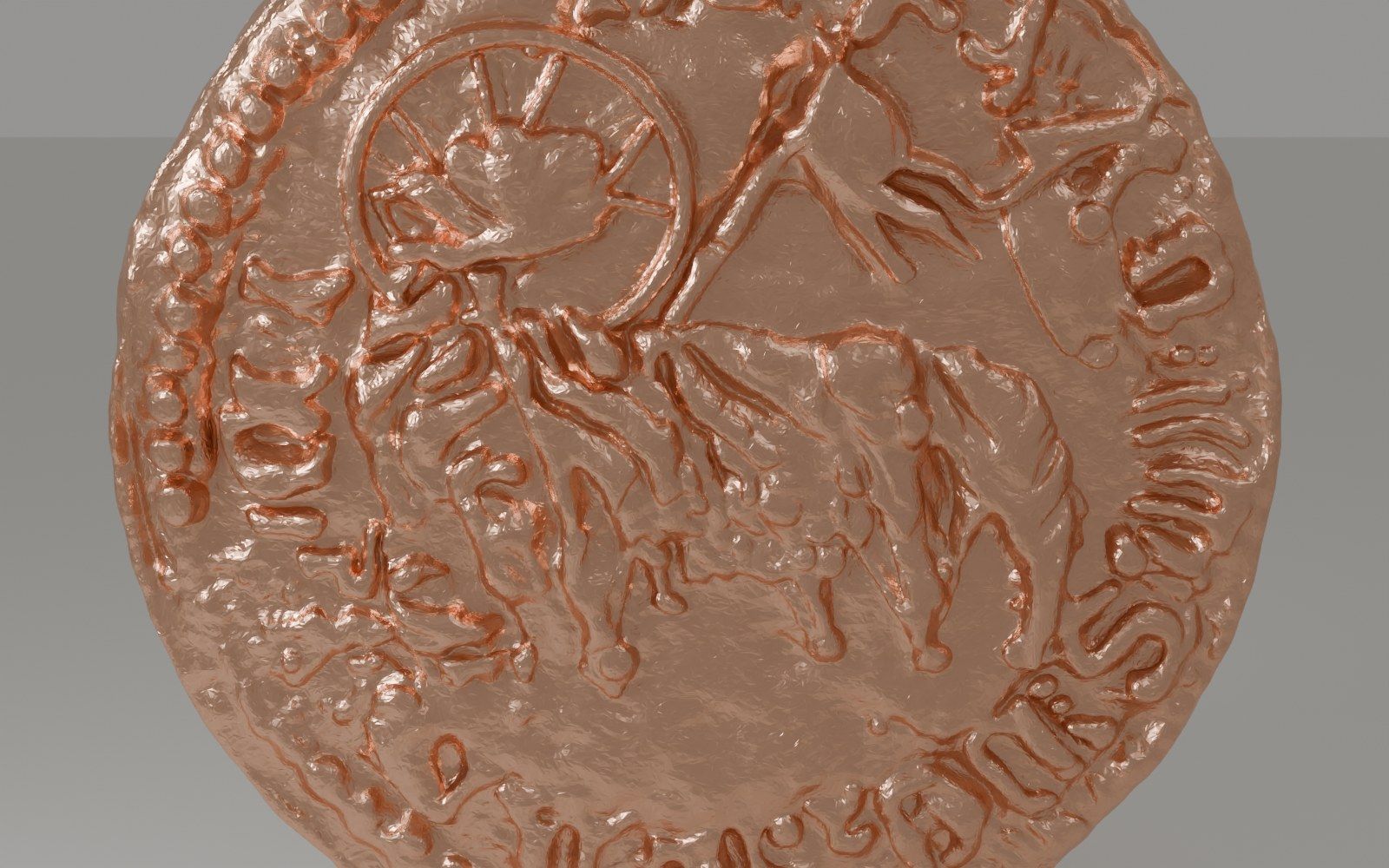
The follaro of Ulcinj is the medieval civic coinage of Ulcinj (Dulcino): small change of copper or copper alloy for payments in local trade, struck by hand. The obverse shows the Virgin enthroned holding the Christ Child; the reverse shows the Lamb of God with halo and cross.
The catalogued legend AGNVS DEI means “Lamb of God”, and M D DVLCINO abbreviates Moneta de Dulcino — “coin of Ulcinj”. This is the catalogue reading: the full legend is not reliably legible on the photographed specimen. Follari with the lamb are dated to the 14th century; Sergije Dimitrijević places them from the beginning of the century to the 1370s. The exact year of striking of the specimen shown is not known.
Ulcinj was then a coastal commune with a degree of self-government and its own statute, in which copper follari were struck. The Lexicon of the Archaeology of Montenegro describes exactly this type: the Most Holy Virgin on the obverse, the Lamb of God with halo and cross on the reverse.1 The rulers of Zeta Đurađ II Stracimirović Balšić and Balša III also struck coins in Ulcinj and Bar, and under Venice follari with St Mark on the reverse were struck in Ulcinj.2
The 3D model was made after photographs of a specimen of this type: obverse and reverse were modelled separately, in full relief, and joined into a two-sided coin. The model is a faithful three-dimensional rendering of the type, not a measured survey of the specimen; the mass of the model matches the published specimen (0.77 g), so the relief is lower than on the other coin models in the collection. For 3D printing, obverse and reverse were prepared as separate models.
Note (2)
- CANU, Lexicon of the Archaeology of Montenegro, entry “Ulcinj” (M. Vrzić, A. Ljuljđuraj): „Grad Ulcinj s distriktom (okrugom) bio je jedna od primorskih komuna s određenim stepenom autonomije, u kojoj se kovao bakarni novac (folar), i koja je imala svoj statut.“ (The town of Ulcinj with its district was one of the coastal communes with a degree of autonomy, in which copper coinage (the follaro) was struck, and which had its own statute.) Entry “Numizmatika”: „… ulcinjski novac je na aversu imao predstavu Presvete Bogorodice, a na reversu Agnus dei, ili Božije jagnje sa oreolom i krstom.“ (the coinage of Ulcinj had the Most Holy Virgin on the obverse and the Agnus Dei, the Lamb of God with halo and cross, on the reverse). ↩
- CANU, Lexicon of the Archaeology of Montenegro, entry “Numizmatika”: „Đurađ II Stracimirović Balšić (1385–1403) i Balša III Balšić (1403–1421) kovali su novac u Baru i Ulcinju.“ O mletačkom razdoblju: folari „su kovani u Baru, Ulcinju i Kotoru (u kome je kovnica radila od 1423. do 1640), uvijek sa predstavom svetog Marka na reversu i svetiteljima, patronima ovih gradova, na aversu.“ (Đurađ II and Balša III struck coins in Bar and Ulcinj; in the Venetian period follari were struck in Bar, Ulcinj and Kotor, always with St Mark on the reverse and the town's patron saint on the obverse.) Lexicon of Montenegrin Dynasties (Leksikon crnogorskih dinastija), entry “Novac Balšića” (Z. Deletić): „Đurađ II Stracimirović Balšić kovao je u Ulcinju i Baru dvije vrste novca. Natpisi su na latinici.“ (Đurađ II struck two kinds of coin in Ulcinj and Bar, with Latin legends.) ↩
Obverse and reverse
Obverse and reverse, rendered from the 3D model; metal colour and patina after photographs of the specimen.
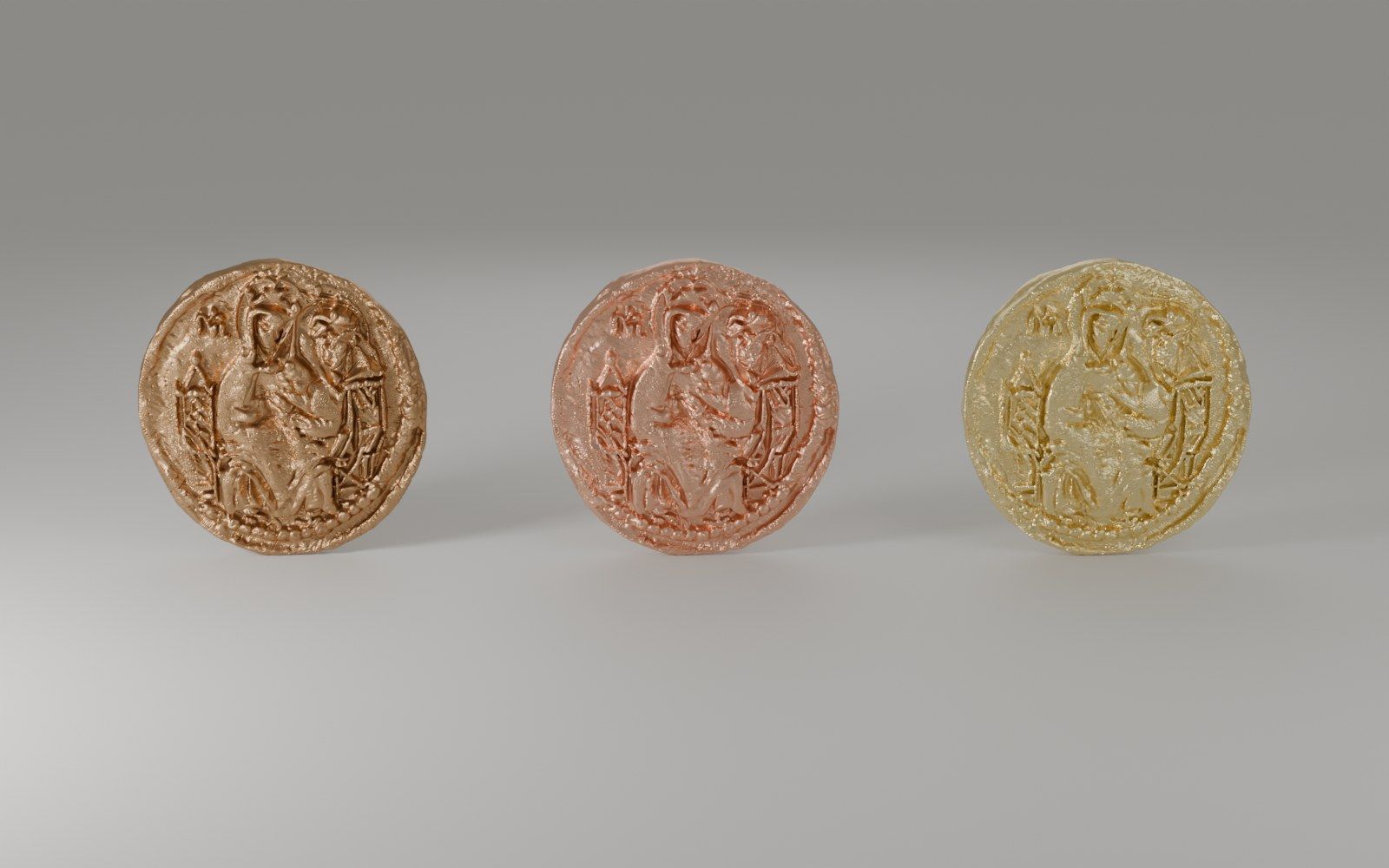
Replicas for 3D printing
Renders of the 3D model in the proposed replica sizes and materials.
- Metal: bronze, copper, brass, silver, iron
- For objects made of metal: coins in bronze, copper and brass, the silver stater in silver, the helmet and the axe in bronze, brass and iron.
The texts, measurements and reconstructions on this site are the analysis of the project implementer (3DExperts) and do not represent the views of the Tourist Organisation of Ulcinj, the Centre for Culture Ulcinj or the Museum of Ulcinj. The findings and interpretations are to be confirmed by the competent institutions and specialists engaged in this research.
Literature and sources (7)
- Centralna banka Crne Gore, Muzej novca: „Novac u Crnoj Gori kroz istoriju“ — www.cbcg.me/me/novac/muzej-novca/novac-u-crnoj-gori-kroz-istoriju
- M. Kirsanov, „Novac gradova u doba Balšića“, Bankar 37 (2017), str. 89–90 — ubcg.info/wp-content/uploads/2017/04/BANKAR_Broj37_2017-04_WEB.pdf
- Numista N#196090, Dobrinić 1.1.3.1 — en.numista.com/196090
- M. Odak, Istorijski zapisi 3–4/2022, str. 39–40 — istorijskizapisi.me/wp-content/uploads/2024/01/2.-Marina-Odak.pdf
- CANU, Leksikon arheologije Crne Gore, odrednica „Ulcinj“ (M. Vrzić, A. Ljuljđuraj) — leks.canu.ac.me/web/arhcg.php?OID=7115
- CANU, Leksikon arheologije Crne Gore: „Numizmatika“ — leks.canu.ac.me/web/arhcg.php?OID=6909
- CANU, Leksikon crnogorskih dinastija, odrednica „Novac Balšića“ (Z. Deletić) — leks.canu.ac.me/web/lcd.php?OID=5588
From the same collection
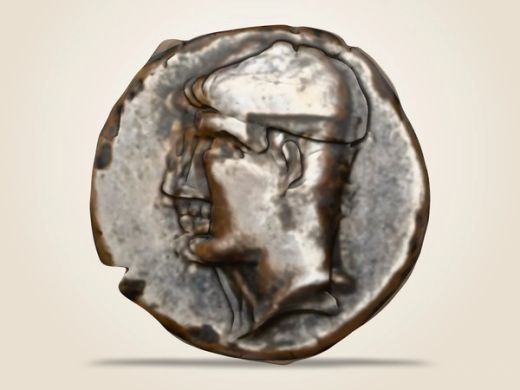
Coin of King Ballaios — Artemis with a torch
3rd century BC (c. 260/250–230) or 2nd century BC (after 168); dating disputed
Coin of King Ballaios — Rhizon type (Risan mint)
2nd century BC, 167–135 per BnF; mid-3rd century BC per the Lexicon of the Archaeology of Montenegro (dating disputed)