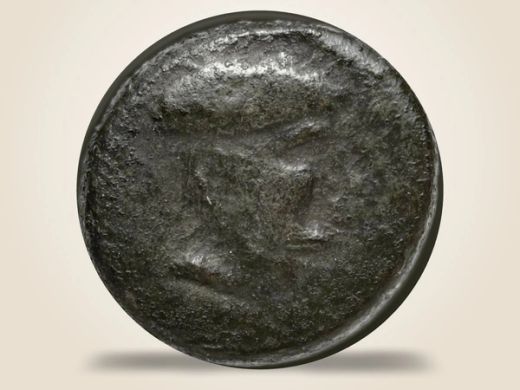
Follaro of Svač — St John and the citadel
Folar Svača — Sveti Jovan i citadela
Drag to rotate · scroll to zoomDrag to rotate · pinch to zoom
loads {mb} MBObjects that were not scanned but reconstructed: the Old Town as a 3D model from open spatial data and, from photographs, the figurine Diva Rumina of Ulcinj, an anthropomorphic slab figurine of fired clay and the oldest object in the collection, a gem with the head of Athena from the 4th–3rd century BC, a side of the 9th-century ciborium (National Museum in Belgrade), the plaque with the IHS monogram in the Old Town, coins of Illyrian kings and cities, of medieval Ulcinj and Svač and of the Roman Empire, and finally an Illyrian-type helmet as a sample. A reconstruction is not identical to the original: shape, ornament and dimensions may differ. An exact model will come from 3D scanning the original, and for the town from a drone or lidar survey.
Description
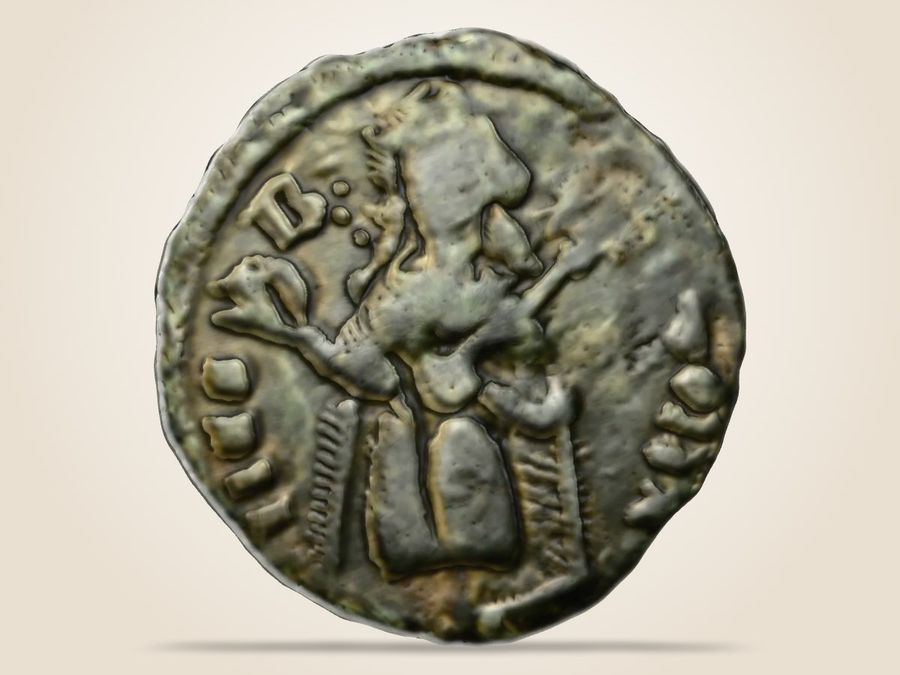
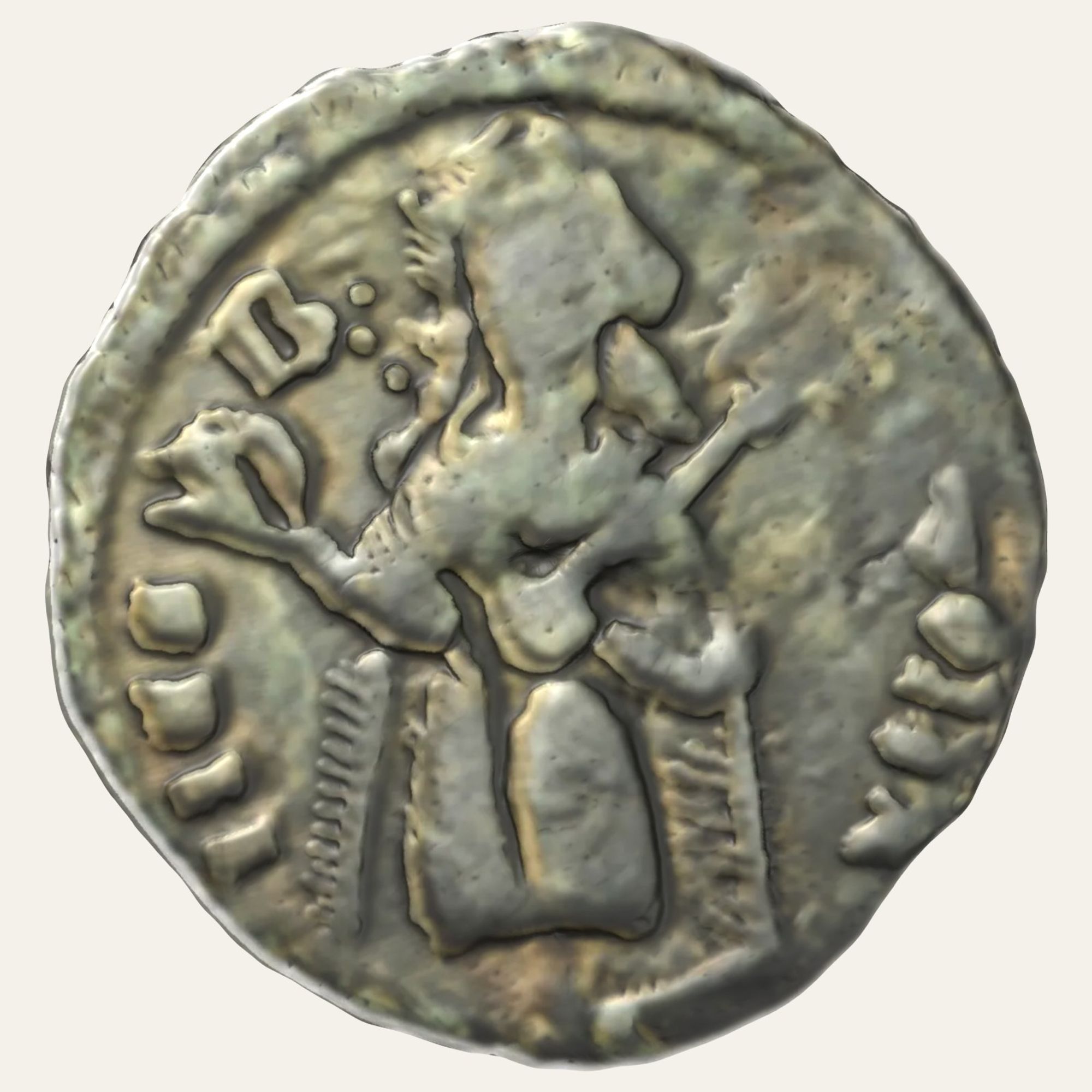
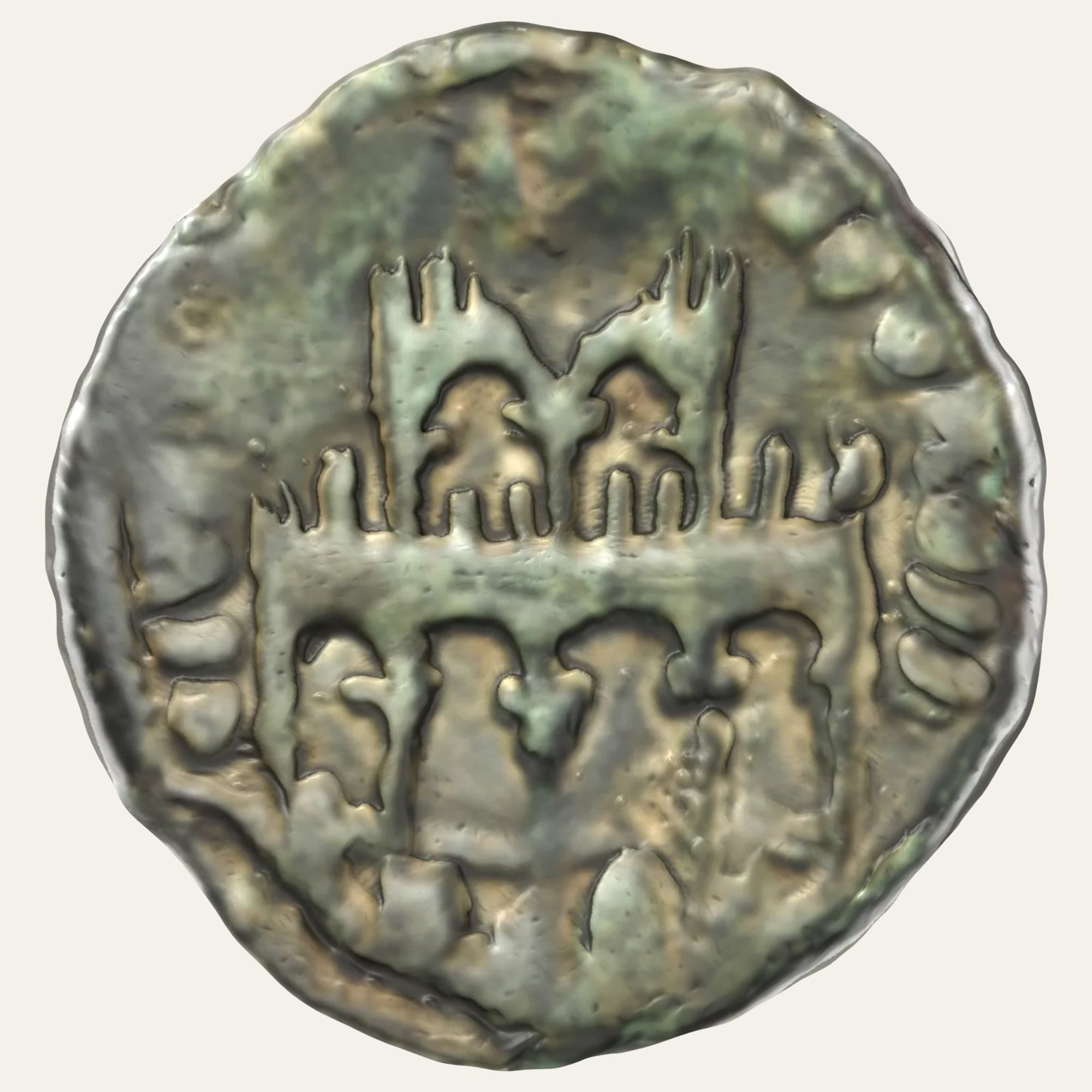
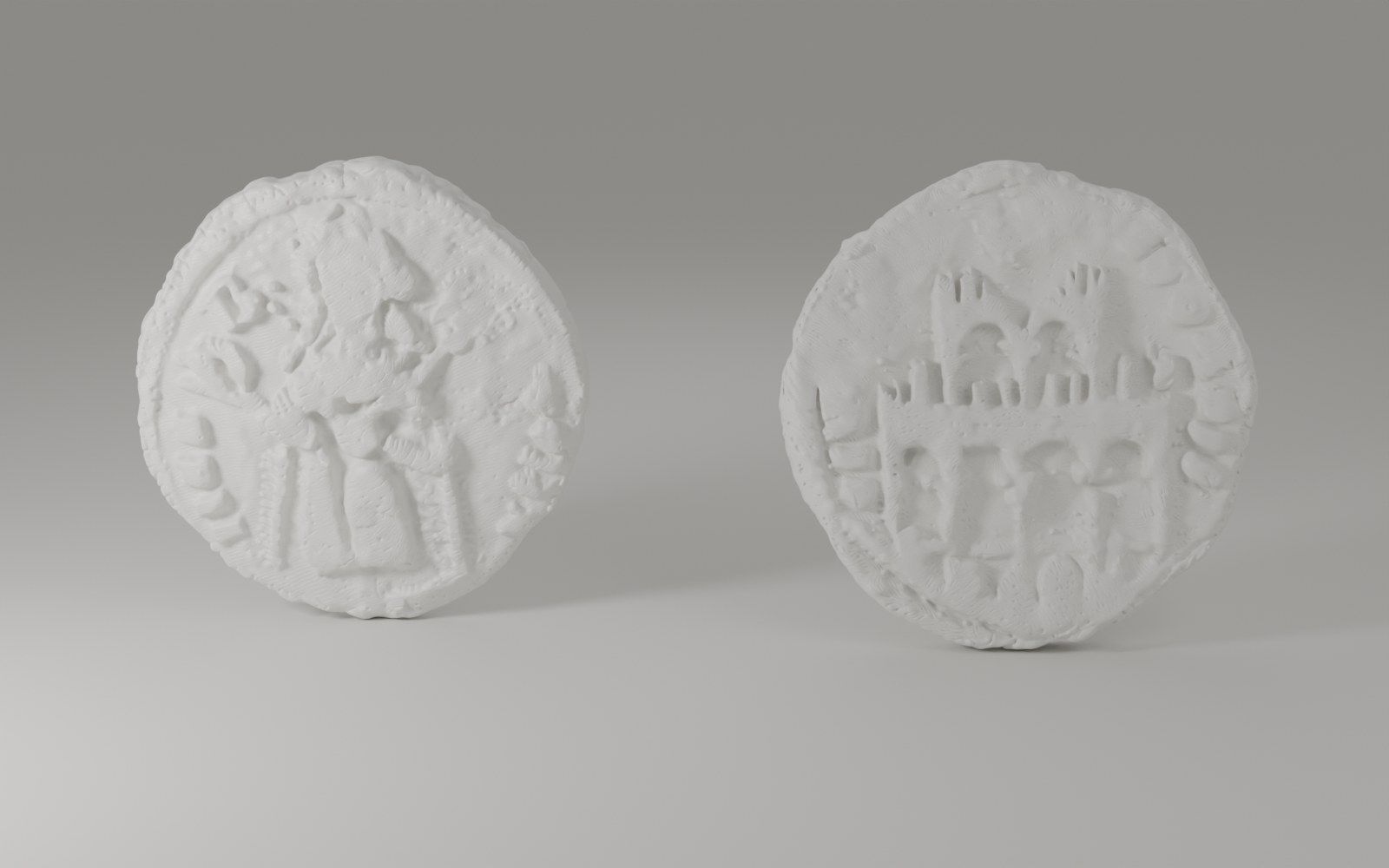
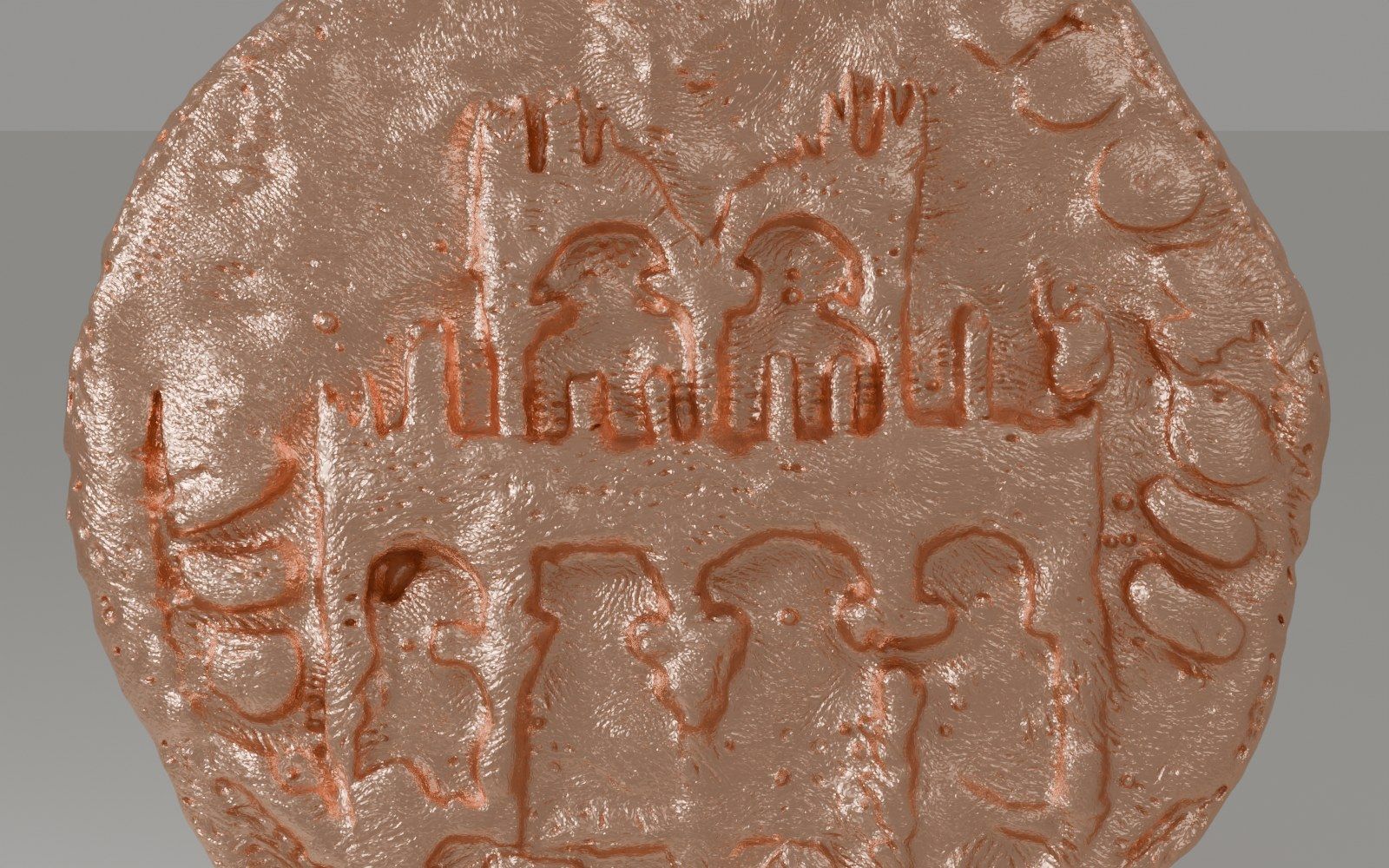
The follaro is small civic change that numismatic literature attributes to medieval Svač (Shas), a town by Lake Šas near Ulcinj. The obverse shows St John the Baptist, patron of the town, holding a sceptre topped with a double cross, with the legend S IOHANES B. The reverse shows a stylised citadel, the emblem of the town, with a legend read in catalogues as CIVITAS SOVATI or SOVACII CIVITAS — “the city of Svač”.
The coin is dated to the second half of the 14th century: c. 1375–1400 in the literature, 1356–1392 in the Leu catalogue. The type is very rare, with few known examples. According to Miodrag Kirsanov, the follaro served local retail trade.
Svač was then at its height: it reached its economic peak in the 14th century, when it also struck its own coins; under the Balšići, at the end of that century, it lost its former strength. Around 1470 it had shrunk to a village, and by 1553 it was completely deserted.1 The Lexicon of the Archaeology of Montenegro also describes this follaro: St John the Baptist on the obverse, a stylised image of the town on the reverse.2
The 3D model was made after photographs of a specimen of this type: obverse and reverse were modelled separately, in full relief, and joined into a two-sided coin at approximately true size (diameter after measured specimens of the type, thickness derived from the weight). The model is a faithful three-dimensional rendering of the type, not a measured survey of the specimen; the mass of the model matches the published specimen (1.68 g), so the relief is lower than on the other coin models in the collection. For 3D printing, obverse and reverse were prepared as separate models.
Note (2)
- CANU, Lexicon of the Archaeology of Montenegro, entry “Svač” (M. Zagarčanin): „Tokom XIV v. Svač doživljava privredni vrhunac, kada kuje i svoj novac. Pod vlašću Balšića krajem XIV v. Svač gubi svoju nekadašnju snagu.“ „Oko 1470. sveden je na nivo sela, a 1553. bio je potpuno pust.“ (In the 14th century Svač reaches its economic peak, when it also strikes its own coins. Under the Balšići at the end of the 14th century Svač loses its former strength. Around 1470 it was reduced to a village, and by 1553 it was completely deserted.) ↩
- CANU, Lexicon of the Archaeology of Montenegro, entry “Numizmatika”: „Svi primorski gradovi u Zeti, kovali su autonomni novac – folar.“ (All the coastal towns of Zeta struck autonomous coinage, the follaro.) „… u Svaču je na aversu Sveti Jovan Krstitelj, a na reversu stilizovana predstava grada“ (at Svač, St John the Baptist on the obverse and a stylised image of the town on the reverse). ↩
Obverse and reverse
Obverse and reverse, rendered from the 3D model; metal colour and patina after photographs of the specimen.
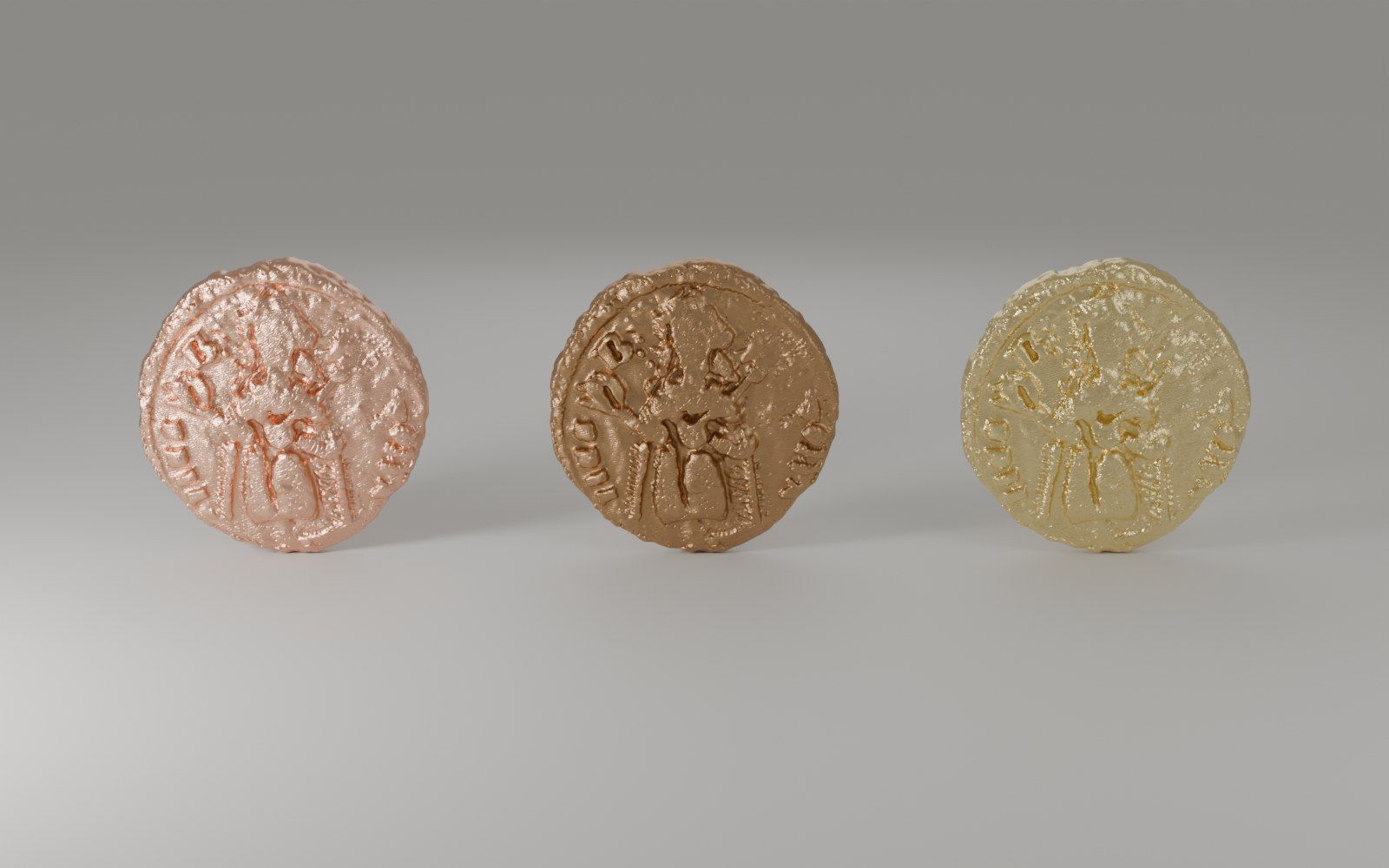
Replicas for 3D printing
Renders of the 3D model in the proposed replica sizes and materials.
- Metal: bronze, copper, brass, silver, iron
- For objects made of metal: coins in bronze, copper and brass, the silver stater in silver, the helmet and the axe in bronze, brass and iron.
The texts, measurements and reconstructions on this site are the analysis of the project implementer (3DExperts) and do not represent the views of the Tourist Organisation of Ulcinj, the Centre for Culture Ulcinj or the Museum of Ulcinj. The findings and interpretations are to be confirmed by the competent institutions and specialists engaged in this research.
Literature and sources (4)
- CANU, Leksikon arheologije Crne Gore: „Numizmatika“ — leks.canu.ac.me/web/arhcg.php?OID=6909
- M. Kirsanov, „Folar — novac grada Svača“, Bankar 50 (2020), str. 82–87 — ubcg.info/wp-content/uploads/2021/01/BANKAR_Broj50_2020-10_WEB.pdf
- Leu Numismatik, aukcija 50, lot 4277 (16. jul 2024) — leunumismatik.com/en/lot/50/4277
- CANU, Leksikon arheologije Crne Gore, odrednica „Svač“ (M. Zagarčanin) — leks.canu.ac.me/web/arhcg.php?OID=7017
From the same collection
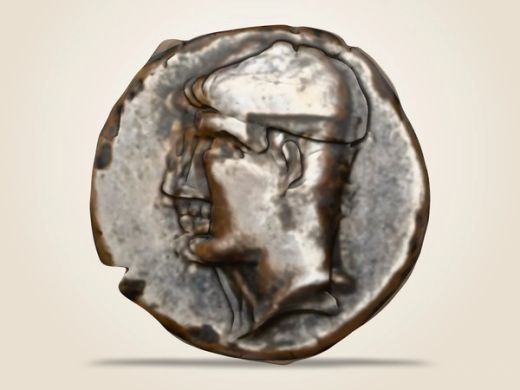
Coin of King Ballaios — Artemis with a torch
3rd century BC (c. 260/250–230) or 2nd century BC (after 168); dating disputed
Coin of King Ballaios — Rhizon type (Risan mint)
2nd century BC, 167–135 per BnF; mid-3rd century BC per the Lexicon of the Archaeology of Montenegro (dating disputed)