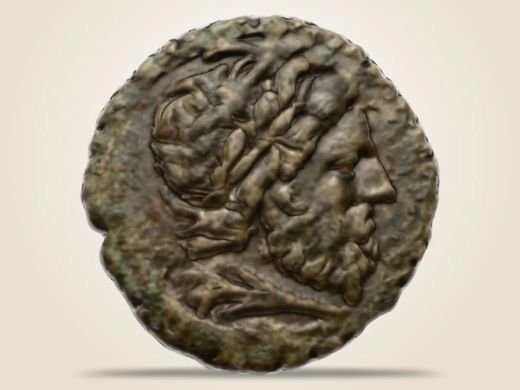
Coin of King Ballaios — Artemis with a torch
Novac kralja Balajosa — Artemida sa bakljom
Drag to rotate · scroll to zoomDrag to rotate · pinch to zoom
loads {mb} MBObjects that were not scanned but reconstructed: the Old Town as a 3D model from open spatial data and, from photographs, the figurine Diva Rumina of Ulcinj, an anthropomorphic slab figurine of fired clay and the oldest object in the collection, a gem with the head of Athena from the 4th–3rd century BC, a side of the 9th-century ciborium (National Museum in Belgrade), the plaque with the IHS monogram in the Old Town, coins of Illyrian kings and cities, of medieval Ulcinj and Svač and of the Roman Empire, and finally an Illyrian-type helmet as a sample. A reconstruction is not identical to the original: shape, ornament and dimensions may differ. An exact model will come from 3D scanning the original, and for the town from a drone or lidar survey.
Description
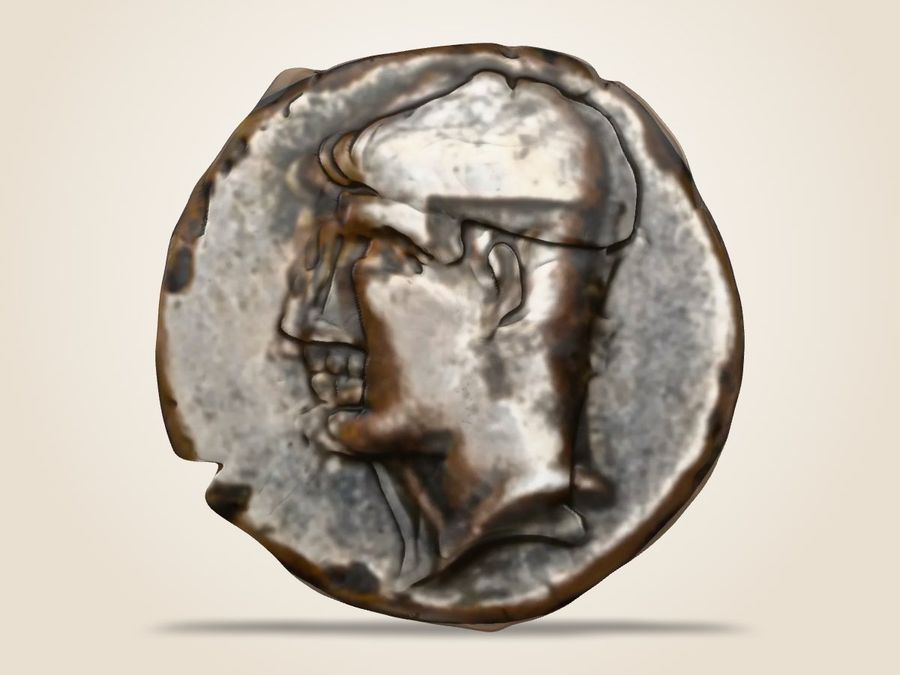
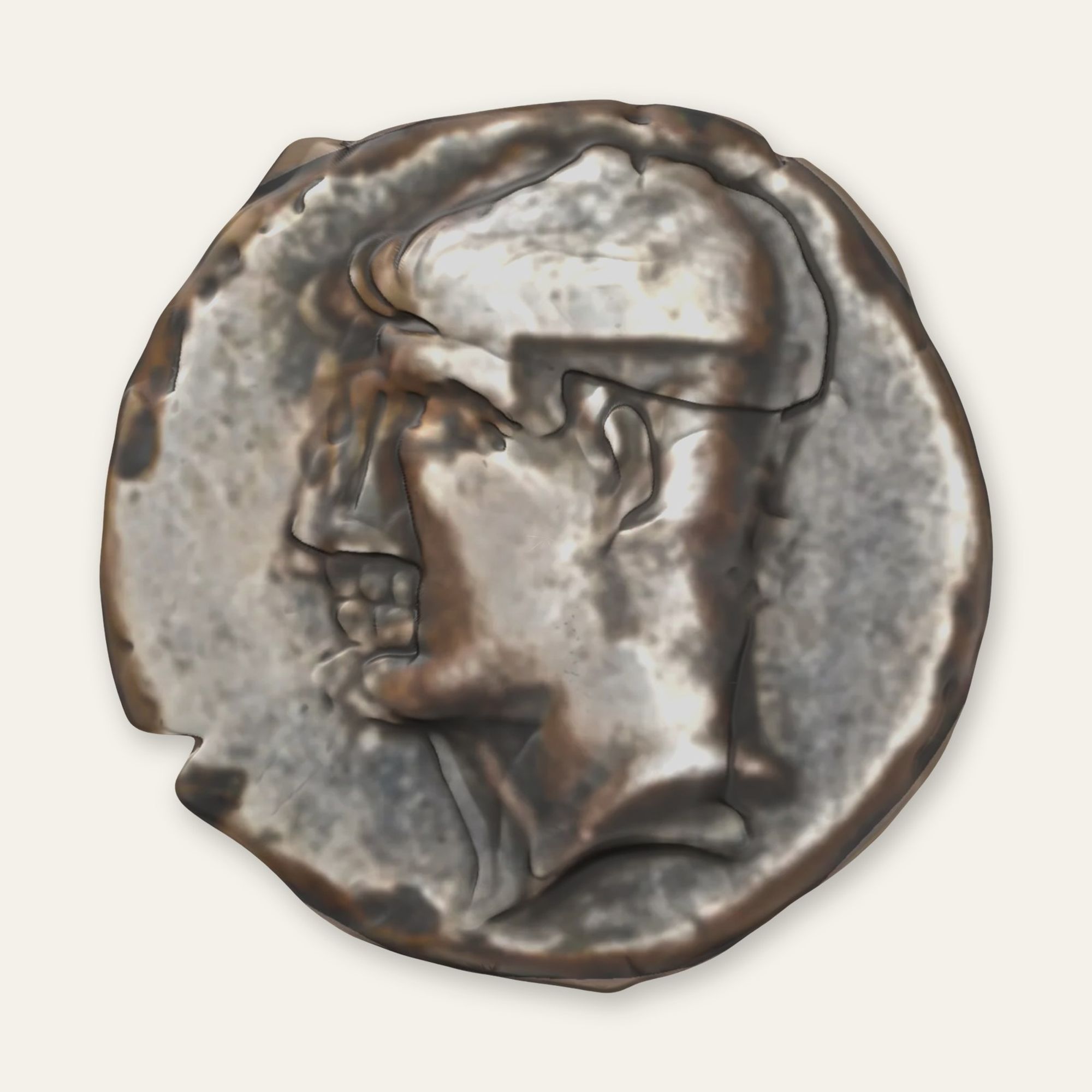
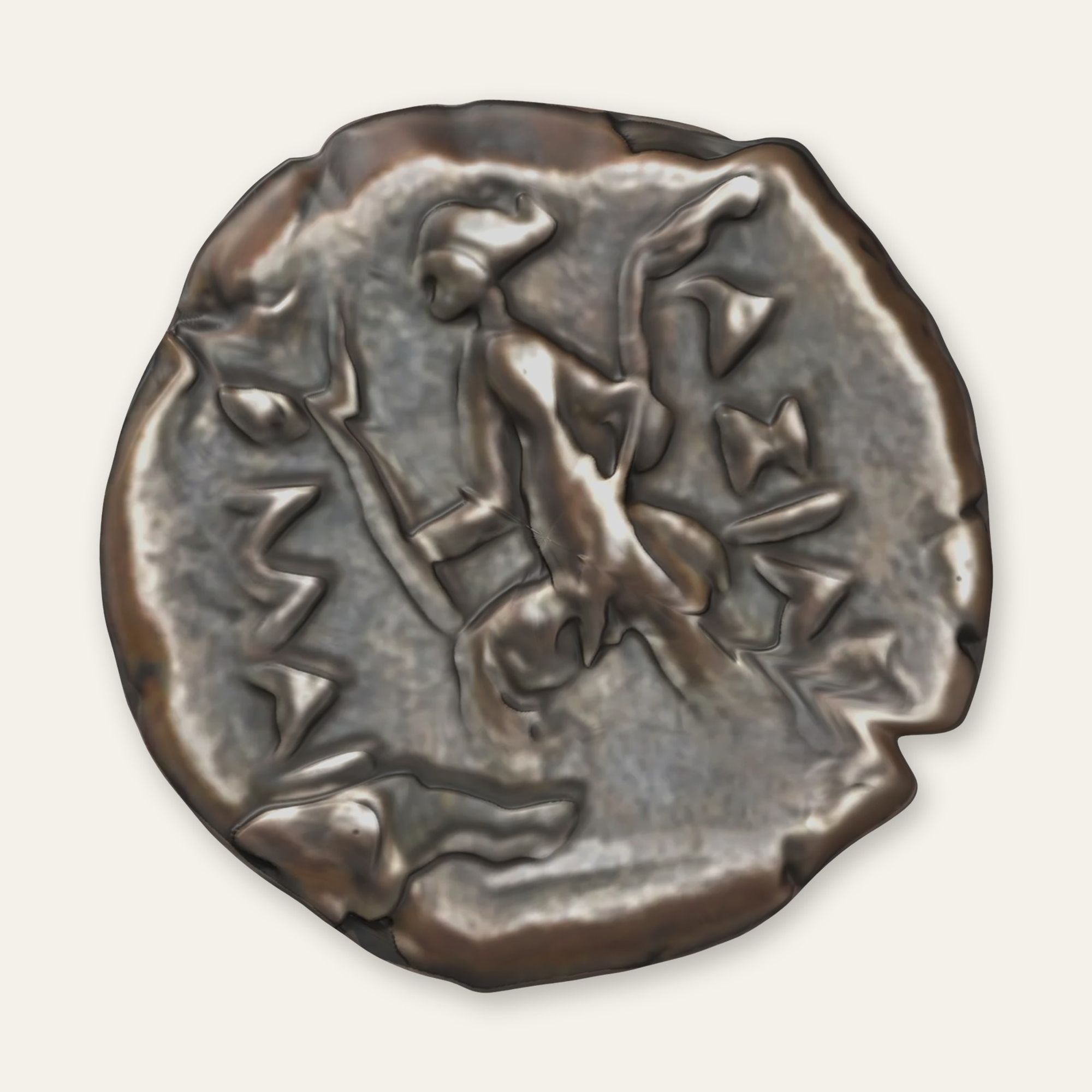
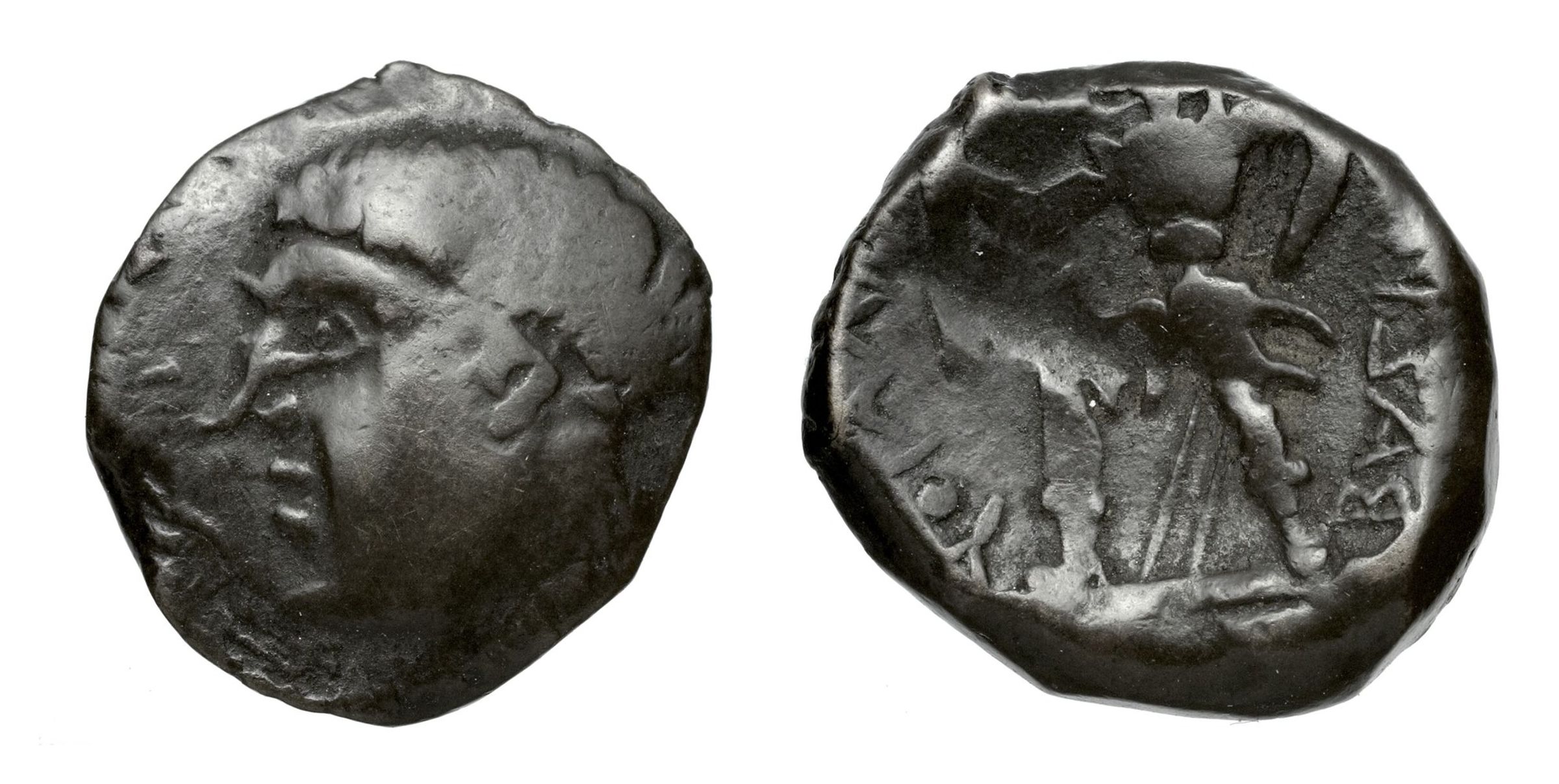
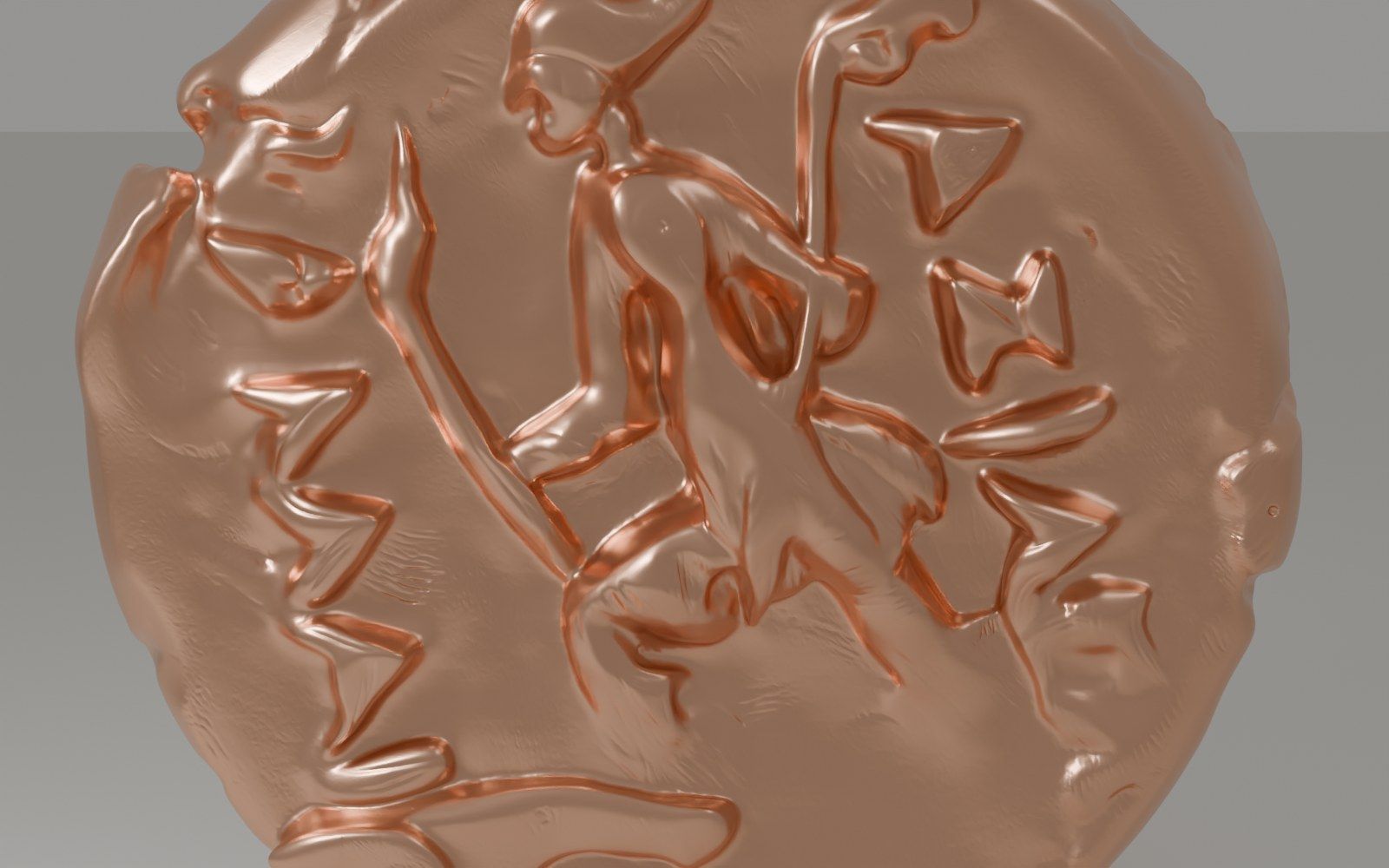
A bronze coin of the Illyrian king Ballaios, attributed to the mint of ancient Rhizon, today Risan in the Bay of Kotor. The obverse shows the king’s head facing left; on the reverse Artemis walks left with a torch in her right hand and two spears in her left, with the legend ΒΑΣΙΛΕΩΣ ΒΑΛΛΑΙΟΥ — “of King Ballaios”.1 Many specimens were found at the site of Carine in the lower part of the ancient town. The Great Hoard of King Ballaios was also excavated there in 2010: 4,565 bronze coins, about 12 kg, hidden in a ceramic pot under the floor of a house; all but one are of this type. The hoard is kept at the Centre for Conservation and Archaeology of Montenegro.2 One room there was considered as a possible mint, but the 2011 excavations did not reliably confirm that use.
The date is disputed. A recent proposal based on excavations in Risan places Ballaios’ reign and coinage c. 260/250–230 BC; the British Museum keeps the earlier accepted date after 168 BC. The Lexicon of the Archaeology of Montenegro states that pottery and radiocarbon results from Risan place Ballaios' reign in the middle of the 3rd century BC, and the burial of the Great Hoard roughly at the end of that century.12 The Artemis on the reverse is the same goddess to whom the Ulcinj altar in this collection is dedicated.
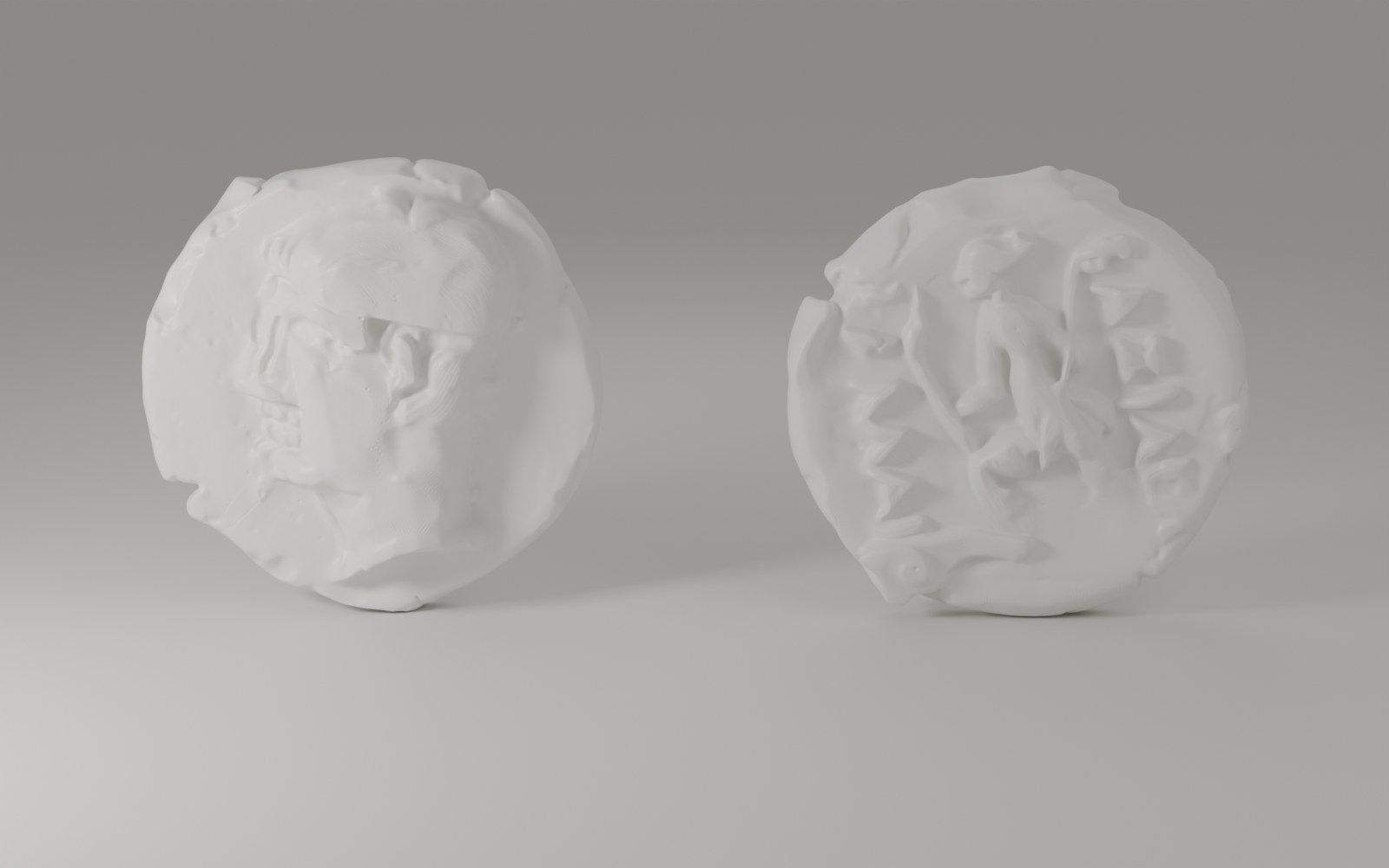
The 3D model was made after photographs of a specimen of this type: obverse and reverse were modelled separately, in full relief, and joined into a two-sided coin at approximately true size (diameter after measured specimens of the type, thickness derived from the weight). The model is a faithful three-dimensional rendering of the type, not a measured survey of the specimen; the relief height is emphasised for legibility. For 3D printing, obverse and reverse were prepared as separate models.
The photographs of originals in the gallery come from public collections, under the licence each collection states; source and link are in the notes.3
Note (3)
- CANU, Lexicon of the Archaeology of Montenegro, entry “Balajos” (Č. Marković): the Pharos type has on the reverse „statičnom figurom Artemide koja drži baklju ispred sebe“ (a static figure of Artemis holding a torch before her), the Rhizon type a dynamic Artemis moving quickly to the left „s bakljom u desnoj ruci i dva koplja u lijevoj“ (with a torch in the right hand and two spears in the left); „Rizonski tip je poznat u srebru i bronzi, a faroski samo u bronzi“ (the Rhizon type is known in silver and bronze, the Pharos type only in bronze). Evans dated the coinage between c. 167 and c. 135 BC, J. M. F. May c. 195/190–175 BC; the most recent views point to the second half of the 3rd century BC, and pottery and radiocarbon results from the excavations at Risan place his reign in the middle of the 3rd century BC. ↩
- CANU, Lexicon of the Archaeology of Montenegro, entry “Velika ostava novca kralja Balajosa” (V. Kovačević, P. Diček): found in 2010 at Carine, “in situ and complete”, in a ceramic pot under the floor and wall of a house; „Sadržaj ove ostave čini ukupno 4.565 primjeraka bronzanog novca, težine oko 12 kg“ (the hoard contains 4,565 bronze coins in all, weighing about 12 kg), all but one of Ballaios' Rhizon type; the only other coin is a bronze of Dyrrhachium, Heracles/Pegasus type. The hoard was buried roughly at the end of the 3rd century BC. The titles of the 2010 papers (P. Dyczek, R. Ciołek, Novensia 21) give 4,656 coins. ↩
- Source: photographs of the obverse and reverse, Bibliothèque nationale de France, Monnaies, médailles et antiques, Fonds général 282 — https://commons.wikimedia.org/wiki/File:Monnaie_-_Bronze,_Incertain,_Illyrie,_Ballaios_-_btv1b85729674_(1_of_2).jpg. Licence: public domain. ↩
Obverse and reverse
Obverse and reverse, rendered from the 3D model; metal colour and patina after photographs of the specimen.
Plates from the documentation
Replicas for 3D printing
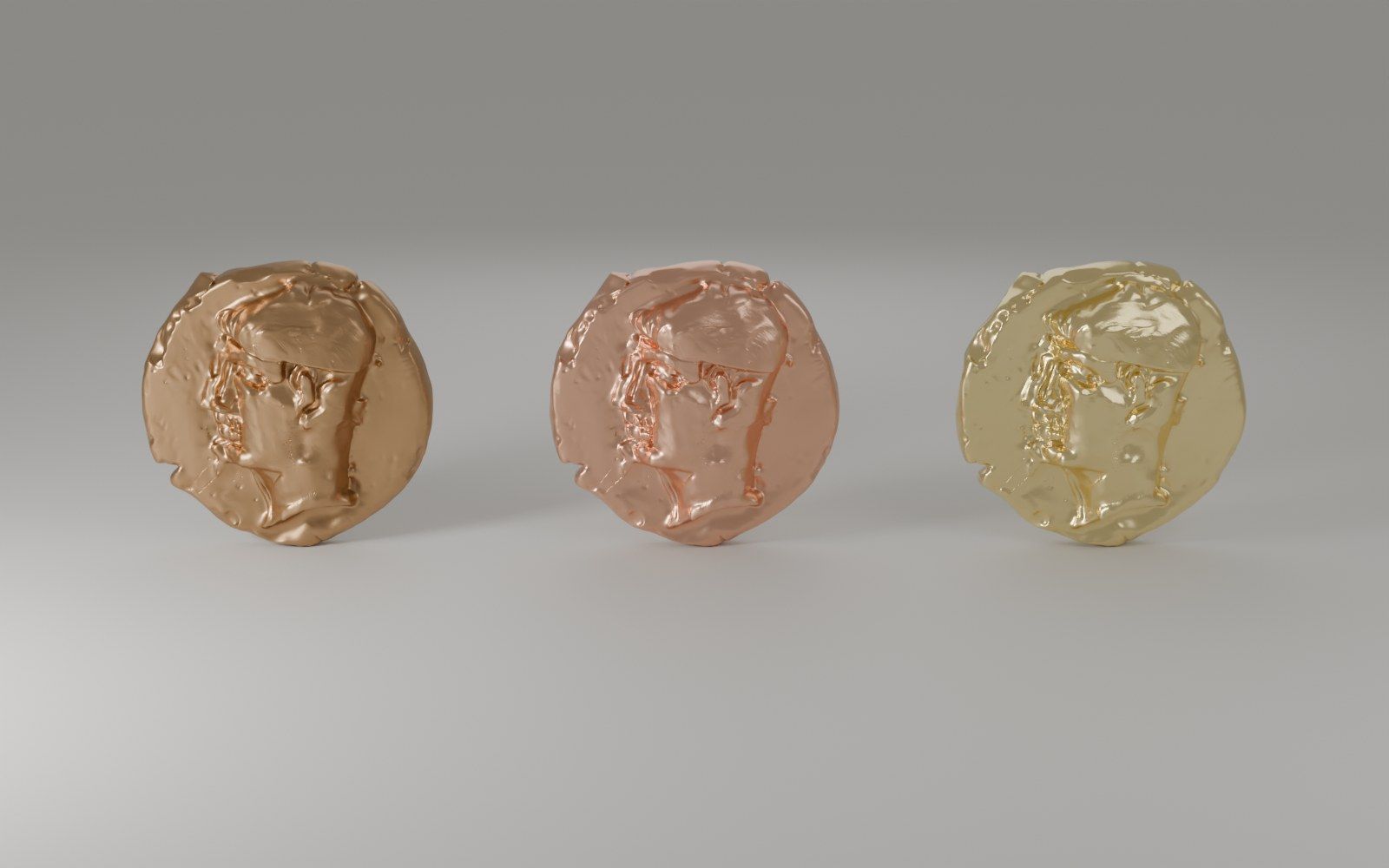
Renders of the 3D model in the proposed replica sizes and materials.
- Metal: bronze, copper, brass, silver, iron
- For objects made of metal: coins in bronze, copper and brass, the silver stater in silver, the helmet and the axe in bronze, brass and iron.
The texts, measurements and reconstructions on this site are the analysis of the project implementer (3DExperts) and do not represent the views of the Tourist Organisation of Ulcinj, the Centre for Culture Ulcinj or the Museum of Ulcinj. The findings and interpretations are to be confirmed by the competent institutions and specialists engaged in this research.
Literature and sources (7)
- Britanski muzej, primjerak 1889,1106.34 — www.britishmuseum.org/collection/object/C_1889-1106-34
- T. Kowal, istraživanja u Risnu 2009–2010, str. 200 — archeo.uw.edu.pl/zalaczniki/upload1194.pdf
- T. Kowal, istraživanja 2011, Światowit IX (L) A, str. 201 — archeologia.uw.edu.pl/swarch/Swiatowit_IX(L)A2011_s201-207.pdf
- P. Domines Peter, studija o grčko-ilirskom novcu (2024), str. 157 — www.iarh.hr/media/publikacije/ZIA21web.pdf
- Fotografija originala: Bibliothèque nationale de France, Monnaies, médailles et antiques, Fonds général 282 — commons.wikimedia.org/wiki/File:Monnaie_-_Bronze,_Incertain,_Illyrie,_Ballaios_-_btv1b85729674_(1_of_2).jpg (javno vlasništvo).
- CANU, Leksikon arheologije Crne Gore, odrednica „Balajos“ (Č. Marković) — leks.canu.ac.me/web/arhcg.php?OID=6632
- CANU, Leksikon arheologije Crne Gore, odrednica „Velika ostava novca kralja Balajosa“ (V. Kovačević, P. Diček) — leks.canu.ac.me/web/arhcg.php?OID=6922
From the same collection
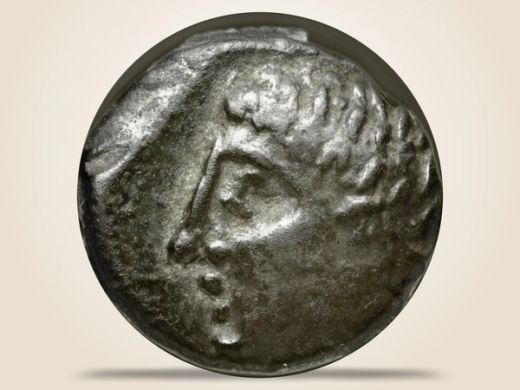
Coin of King Ballaios — Rhizon type (Risan mint)
2nd century BC, 167–135 per BnF; mid-3rd century BC per the Lexicon of the Archaeology of Montenegro (dating disputed)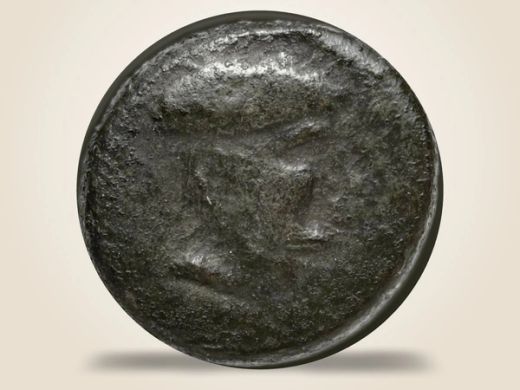
Coin of King Ballaios — Pharos type
2nd century BC, 167–135 per BnF; in a recent proposal 3rd century BC, c. 260/250–230 (dating disputed)