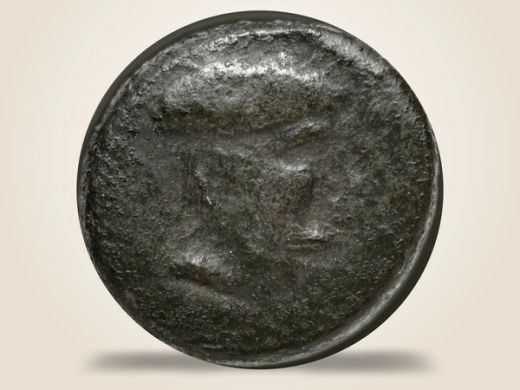
Coin of King Ballaios — Rhizon type (Risan mint)
Novac kralja Balajosa — rizonski tip (kovnica u Risnu)
Drag to rotate · scroll to zoomDrag to rotate · pinch to zoom
loads {mb} MBObjects that were not scanned but reconstructed: the Old Town as a 3D model from open spatial data and, from photographs, the figurine Diva Rumina of Ulcinj, an anthropomorphic slab figurine of fired clay and the oldest object in the collection, a gem with the head of Athena from the 4th–3rd century BC, a side of the 9th-century ciborium (National Museum in Belgrade), the plaque with the IHS monogram in the Old Town, coins of Illyrian kings and cities, of medieval Ulcinj and Svač and of the Roman Empire, and finally an Illyrian-type helmet as a sample. A reconstruction is not identical to the original: shape, ornament and dimensions may differ. An exact model will come from 3D scanning the original, and for the town from a drone or lidar survey.
Description
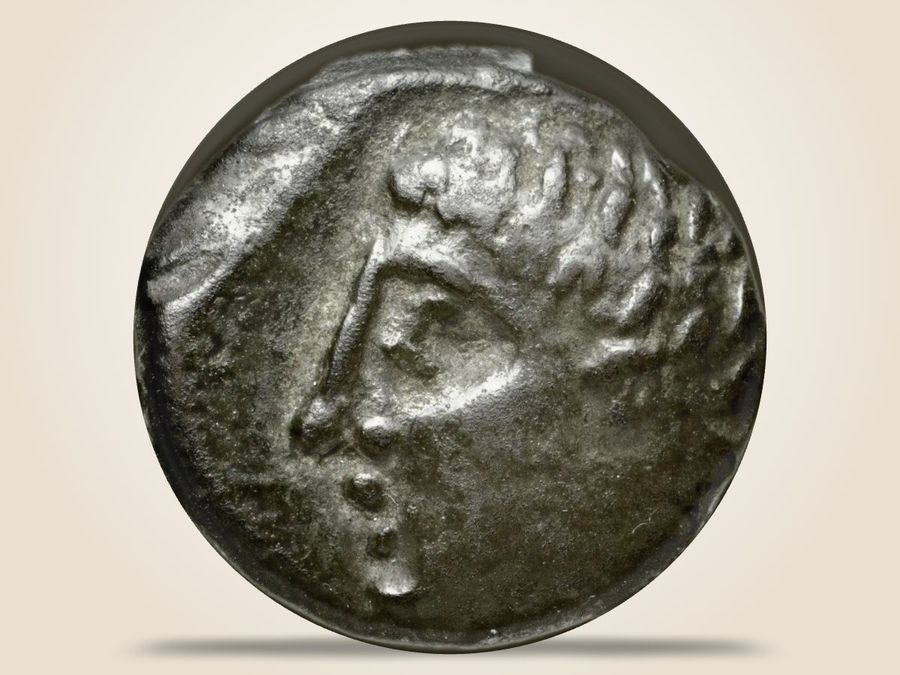
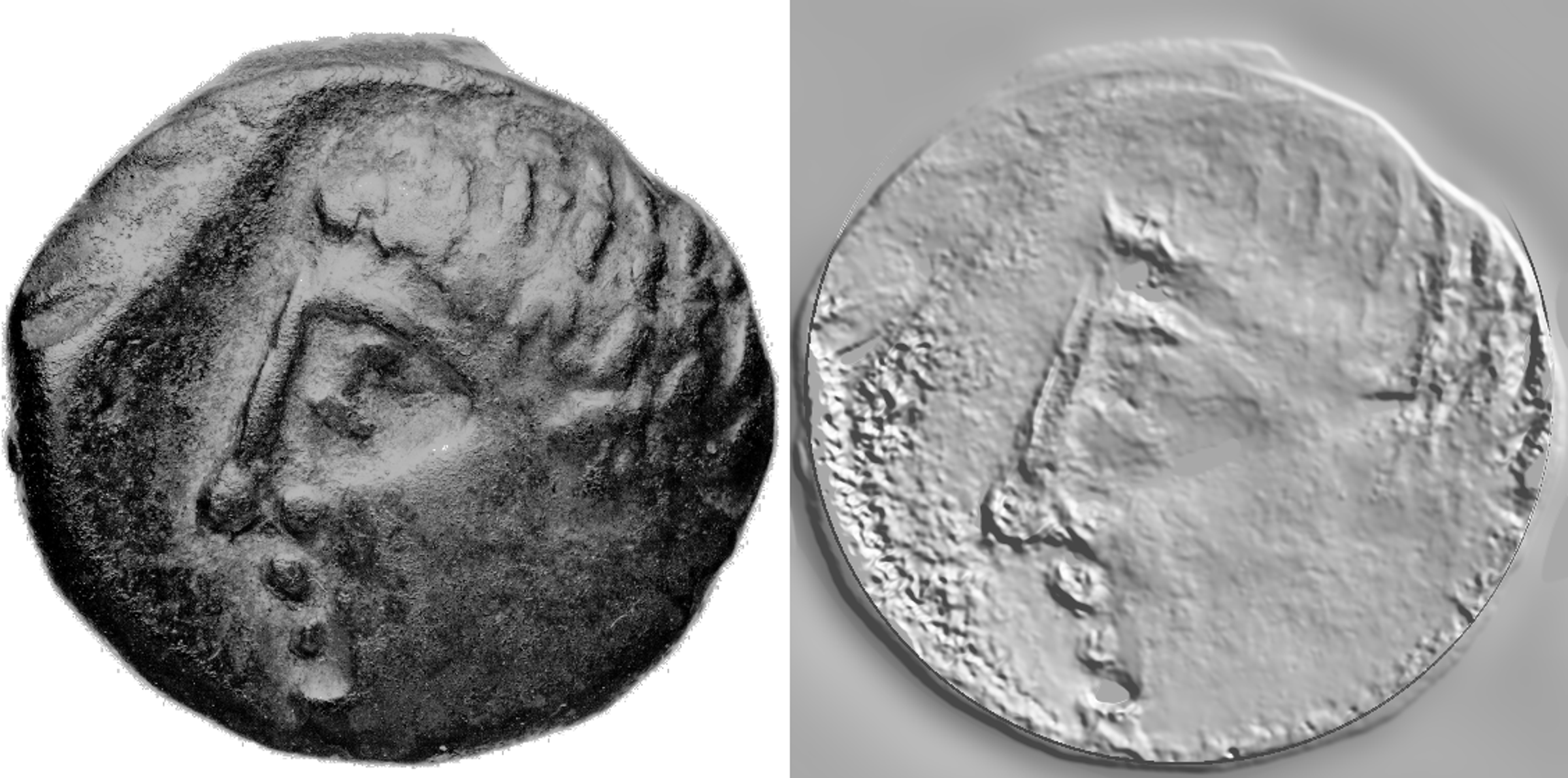
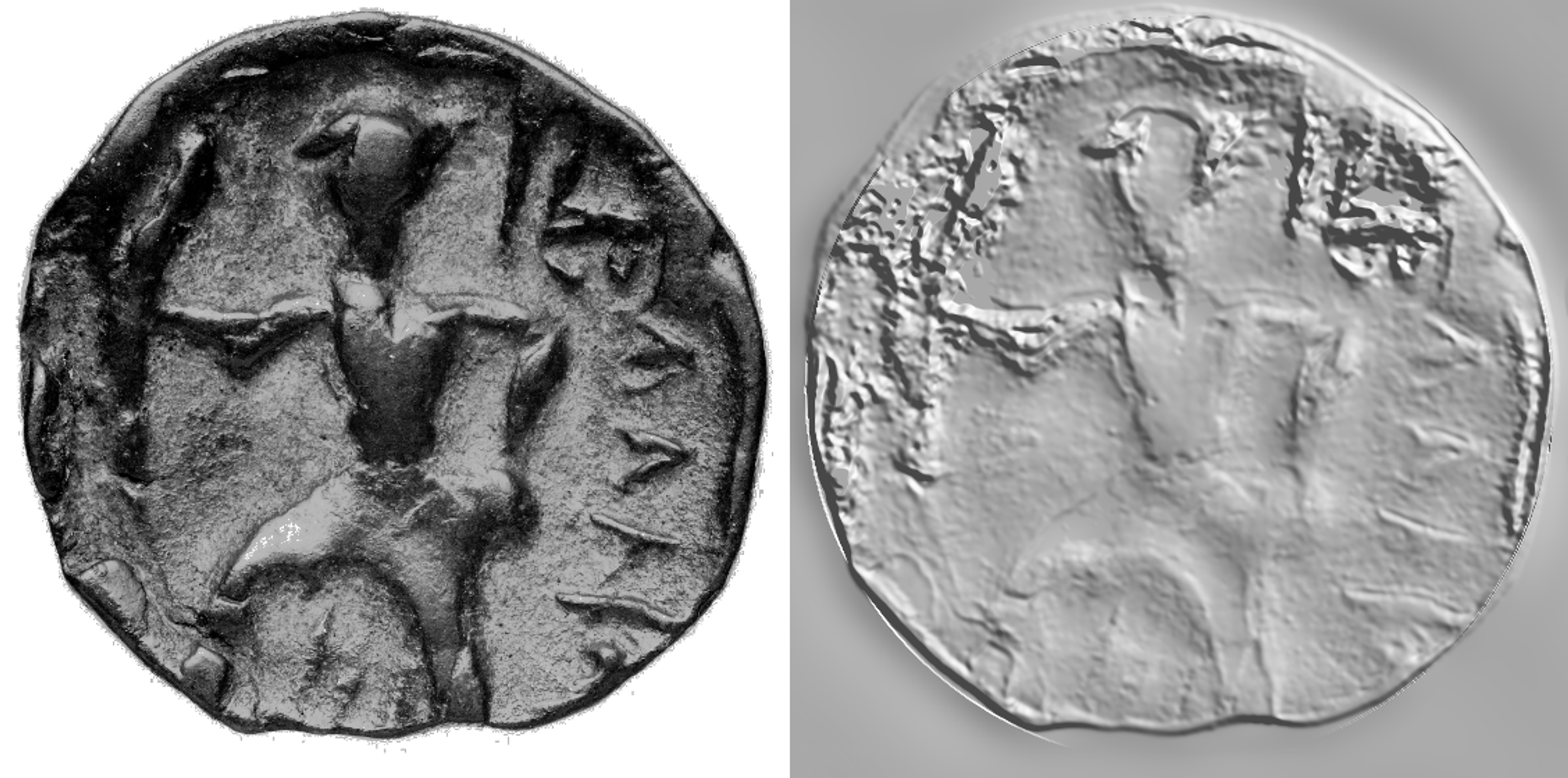
A bronze coin of King Ballaios of the Rhizon type, from the Cabinet des médailles of the Bibliothèque nationale de France (Fonds général 290, 3.27 g). The library attributes it, with a question mark, to the mint of Rhizon, today Risan in the Bay of Kotor, and dates it to 167–135 BC.1 The obverse shows a male head facing left, according to the library probably the king’s portrait. On the reverse Artemis strides to the left, in motion, with a torch in her right hand; along the right edge the letters ΒΑΛΛΑΙ[ΟΥ] — “of Ballaios” — can be read.1
The Lexicon of the Archaeology of Montenegro distinguishes two types of Ballaios’ coinage: the Pharos type, with a calm, standing Artemis, and the Rhizon type, with Artemis moving quickly, holding a torch and two spears, struck in silver and in bronze. According to the Lexicon, pottery and radiocarbon results from Risan place Ballaios’ reign in the middle of the 3rd century BC.2 The Rhizon type is by far the more numerous: of the 4,565 bronze coins of the Great Hoard of King Ballaios, found in Risan in 2010, all but one belong to it.3
In the collection it stands beside another specimen of the Rhizon type and two Pharos specimens from the same library: the same ruler, two reverse types, and each piece with its own die impression.
The 3D model was made from two photographs of the specimen (obverse and reverse) in the collection of the Bibliothèque nationale de France. The relief height was derived from the shading in the photograph, so the model is a faithful 3D drawing, not a measured survey of the coin. The photograph is applied to the model as its colour. The diameter of 17 mm is the catalogue value for this type and the thickness is derived from the mass; the rim of the model is a regular circle, while the flan of the original is irregular. For 3D printing, obverse and reverse were prepared as separate flat-backed plaques, enlarged 3:1, at true and at emphasised relief height.
The photographs of originals in the gallery come from public collections, under the licence each collection states; source and link are in the notes.4
Note (4)
- „[Monnaie : Bronze, Ballaios, Illyrie, Rhizon (?)]“, „Émission : c. 167-135 avant J.-C.“, revers „ΒΑΣΙΛΕΩΣ ΒΑΛΛΑΙΟΥ. Artémis avançant à gauche, tenant une torche de la main droite“, 3,27 g — Bibliothèque nationale de France, Monnaies, médailles et antiques, Fonds général 290 (record cb41820343h); type: BMC Thessaly, Ballaios 7–10. ↩
- CANU, Lexicon of the Archaeology of Montenegro, entry “Balajos” (Č. Marković): the Pharos type has on the reverse „statičnom figurom Artemide koja drži baklju ispred sebe“ (a static figure of Artemis holding a torch before her), the Rhizon type a dynamic Artemis moving quickly to the left „s bakljom u desnoj ruci i dva koplja u lijevoj“ (with a torch in the right hand and two spears in the left); „Rizonski tip je poznat u srebru i bronzi, a faroski samo u bronzi“ (the Rhizon type is known in silver and bronze, the Pharos type only in bronze). Evans dated the coinage between c. 167 and c. 135 BC, J. M. F. May c. 195/190–175 BC; the most recent views point to the second half of the 3rd century BC, and pottery and radiocarbon results from the excavations at Risan place his reign in the middle of the 3rd century BC. ↩
- CANU, Lexicon of the Archaeology of Montenegro, entry “Velika ostava novca kralja Balajosa” (V. Kovačević, P. Diček): found in 2010 at Carine, “in situ and complete”, in a ceramic pot under the floor and wall of a house; „Sadržaj ove ostave čini ukupno 4.565 primjeraka bronzanog novca, težine oko 12 kg“ (the hoard contains 4,565 bronze coins in all, weighing about 12 kg), all but one of Ballaios' Rhizon type; the only other coin is a bronze of Dyrrhachium, Heracles/Pegasus type. The hoard was buried roughly at the end of the 3rd century BC. The titles of the 2010 papers (P. Dyczek, R. Ciołek, Novensia 21) give 4,656 coins. ↩
- Source: photographs of the specimen from which the relief was derived, Bibliothèque nationale de France, Monnaies, médailles et antiques, Fonds général 290 — https://gallica.bnf.fr/ark:/12148/btv1b85729763. Licence: public domain. ↩
Obverse and reverse
Obverse and reverse, rendered from the 3D model; metal colour and patina after photographs of the specimen.
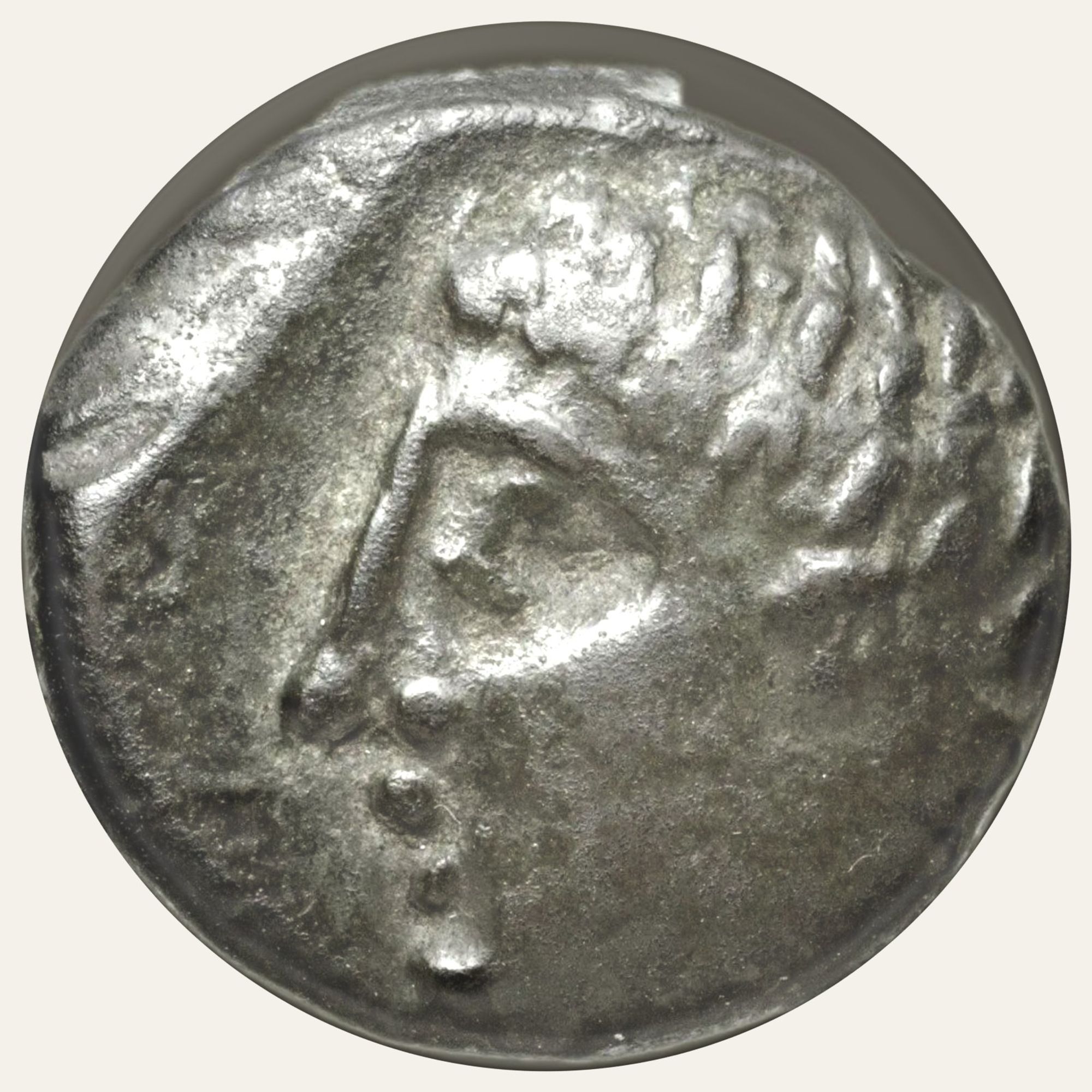
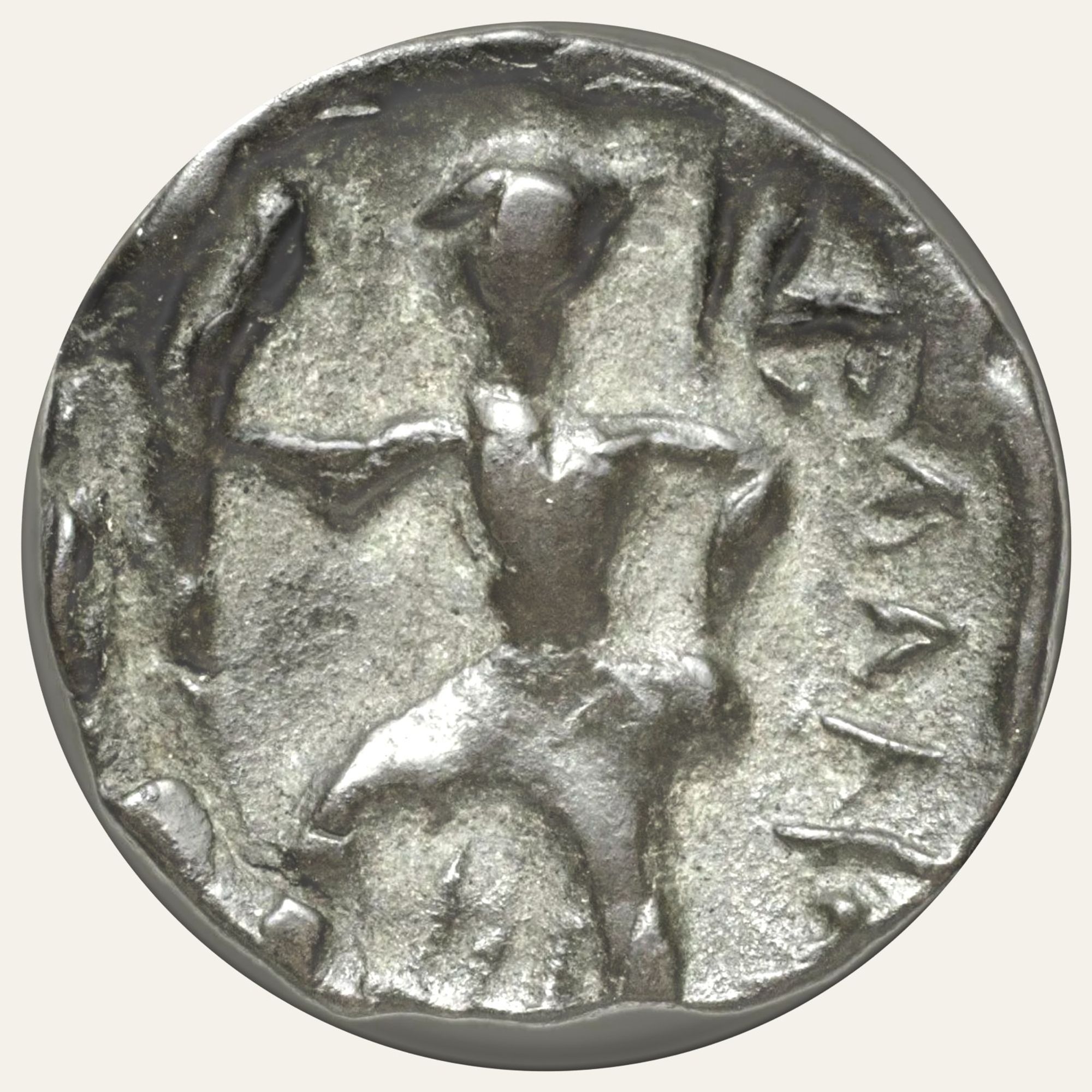
Plates from the documentation
Replicas for 3D printing
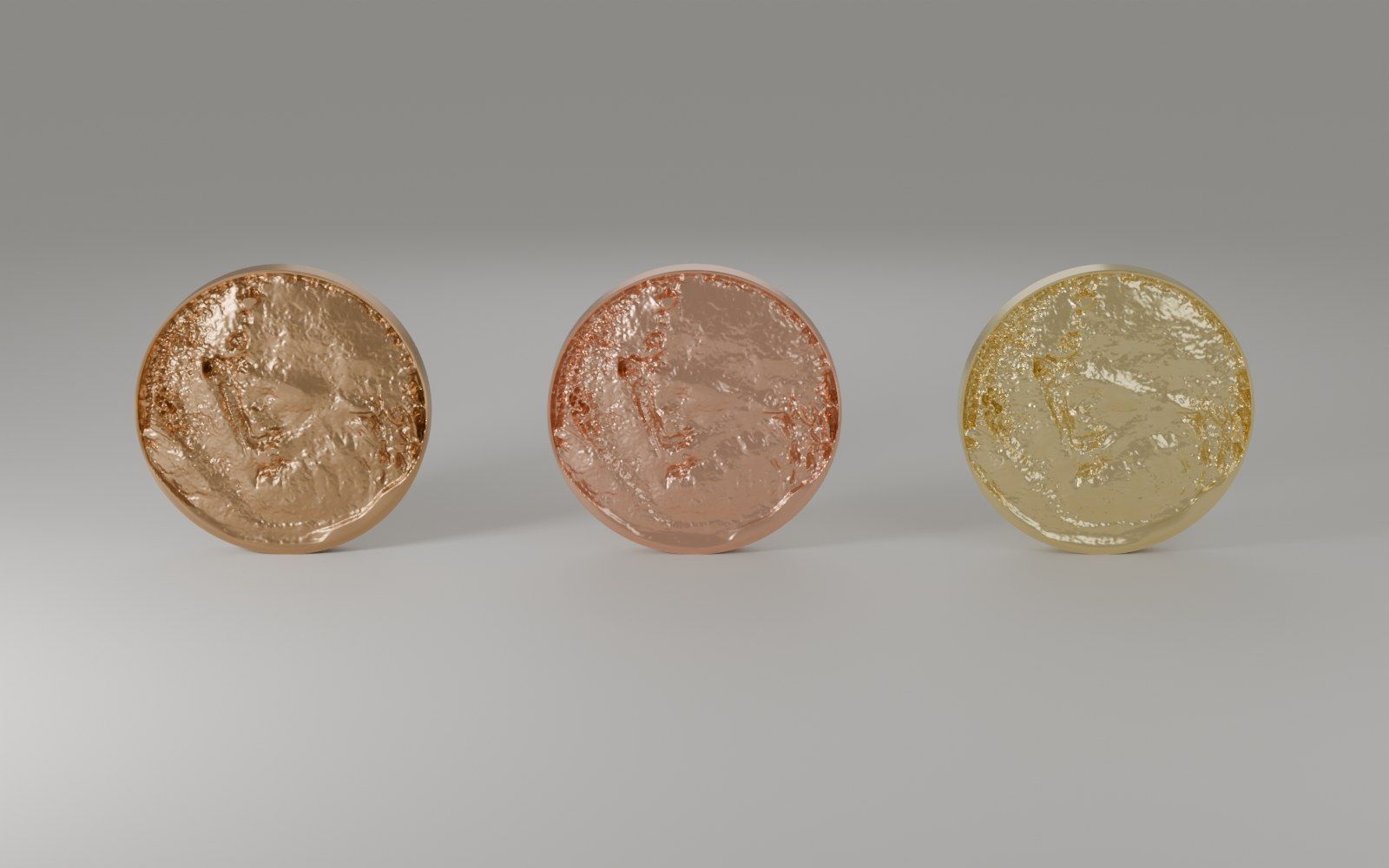
Renders of the 3D model in the proposed replica sizes and materials.
- Metal: bronze, copper, brass, silver, iron
- For objects made of metal: coins in bronze, copper and brass, the silver stater in silver, the helmet and the axe in bronze, brass and iron.
The texts, measurements and reconstructions on this site are the analysis of the project implementer (3DExperts) and do not represent the views of the Centre for Culture Ulcinj, the Museum of Ulcinj or the Tourist Organisation of Ulcinj. The findings and interpretations are to be confirmed by the competent institutions and specialists engaged in this research.
Literature and sources (5)
- Fotografije: Bibliothèque nationale de France, Département des Monnaies, médailles et antiques, Fonds général 290 — gallica.bnf.fr/ark:/12148/btv1b85729763 (javno vlasništvo).
- Bibliothèque nationale de France, zapis cb41820343h — catalogue.bnf.fr/ark:/12148/cb41820343h
- IRIS, Rhizon, Ballaeus, BMC Thessaly 7–10 — greekcoinage.org/iris/id/rhizon.ballaeus.bmc_thessaly.7-10
- CANU, Leksikon arheologije Crne Gore, odrednica „Balajos“ (Č. Marković) — leks.canu.ac.me/web/arhcg.php?OID=6632
- CANU, Leksikon arheologije Crne Gore, odrednica „Velika ostava novca kralja Balajosa“ (V. Kovačević, P. Diček) — leks.canu.ac.me/web/arhcg.php?OID=6922
From the same collection
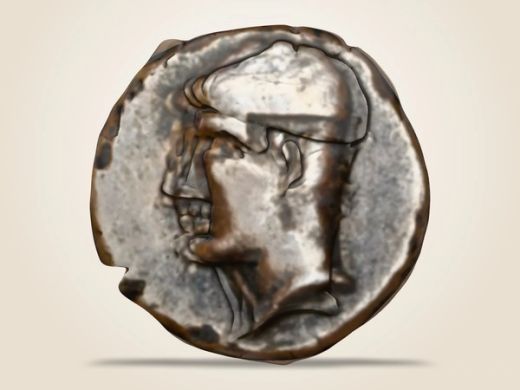
Coin of King Ballaios — Artemis with a torch
3rd century BC (c. 260/250–230) or 2nd century BC (after 168); dating disputed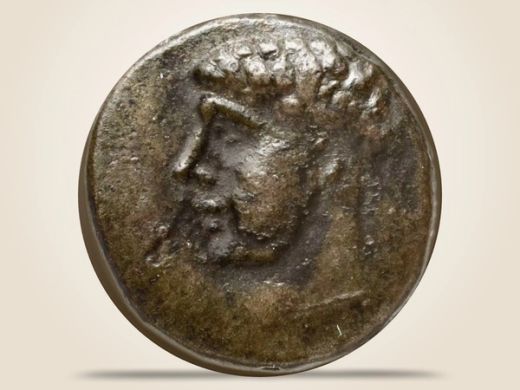
Coin of King Ballaios — second specimen
2nd century BC, 167–135 per BnF; in a recent proposal 3rd century BC, c. 260/250–230 (dating disputed)