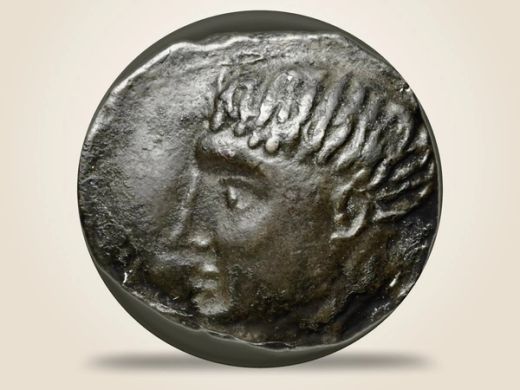
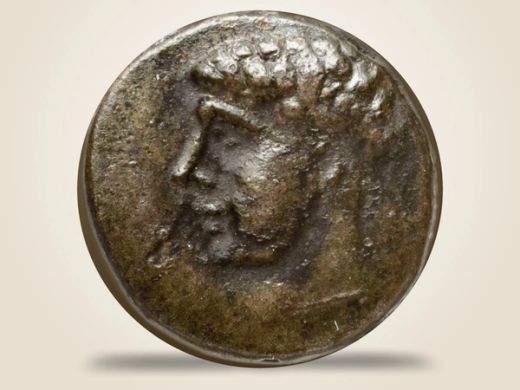
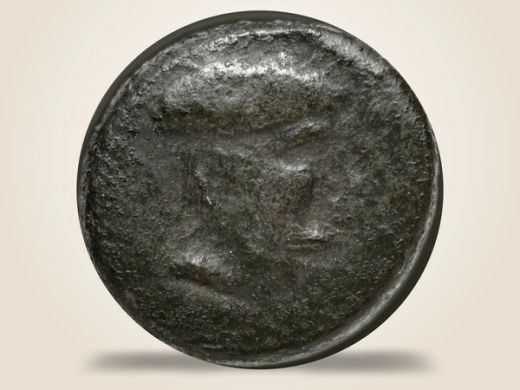
Coin of Skodra — Zeus and an Illyrian ship
Novac grada Skodre — Zevs i ilirski brod
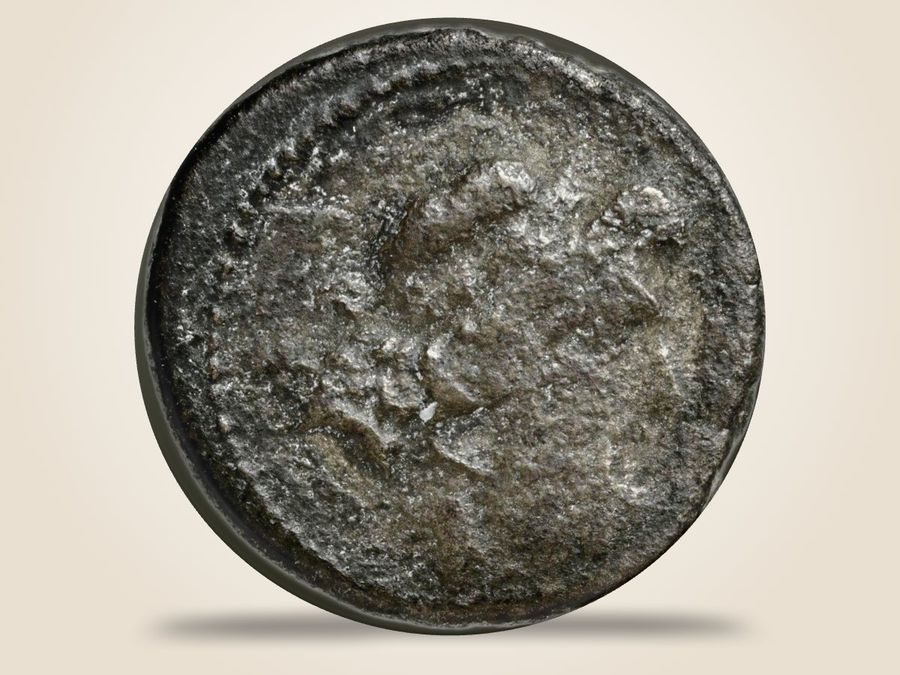
Drag to rotate · scroll to zoomDrag to rotate · pinch to zoom
loads {mb} MBDescription
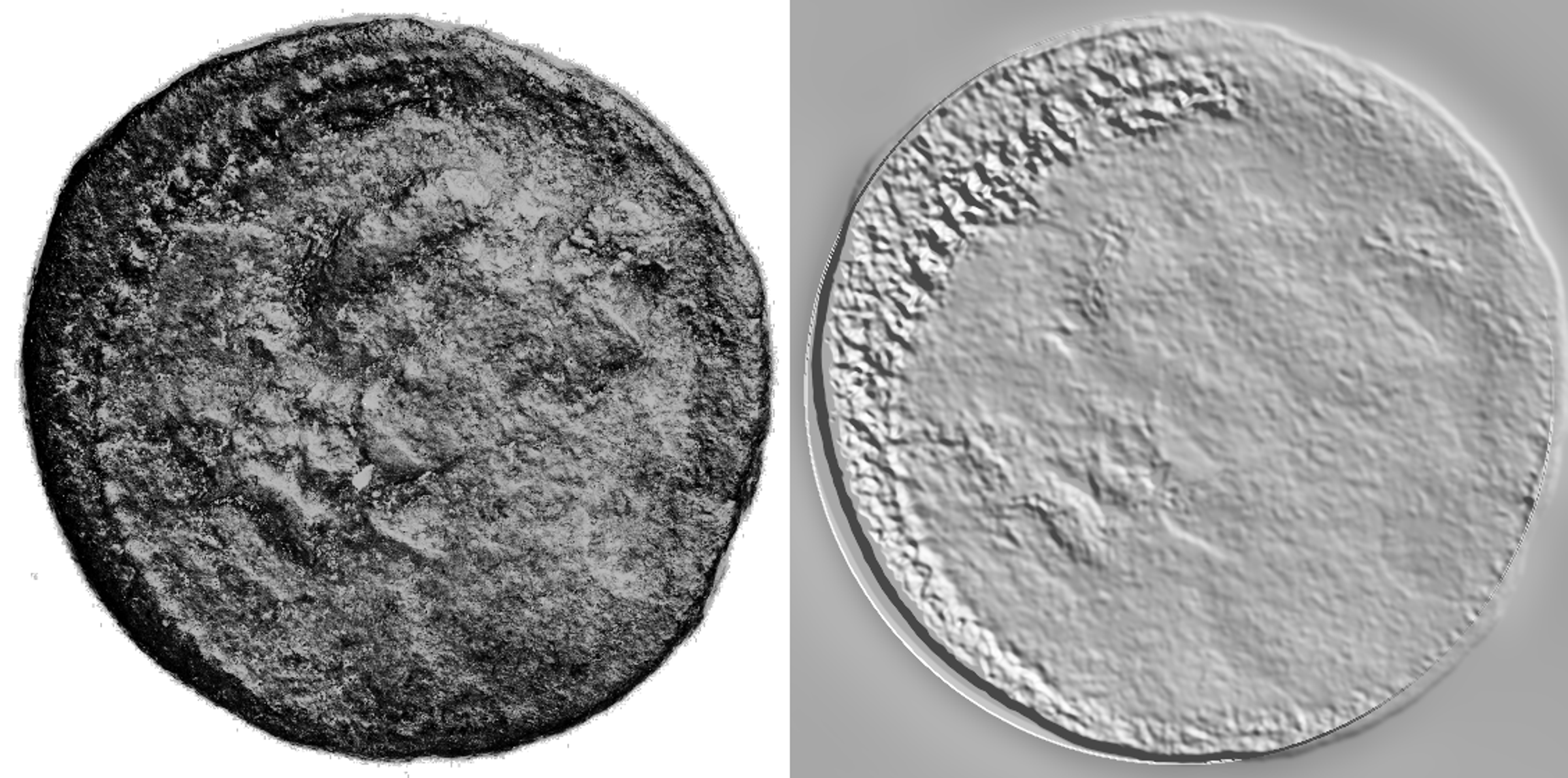
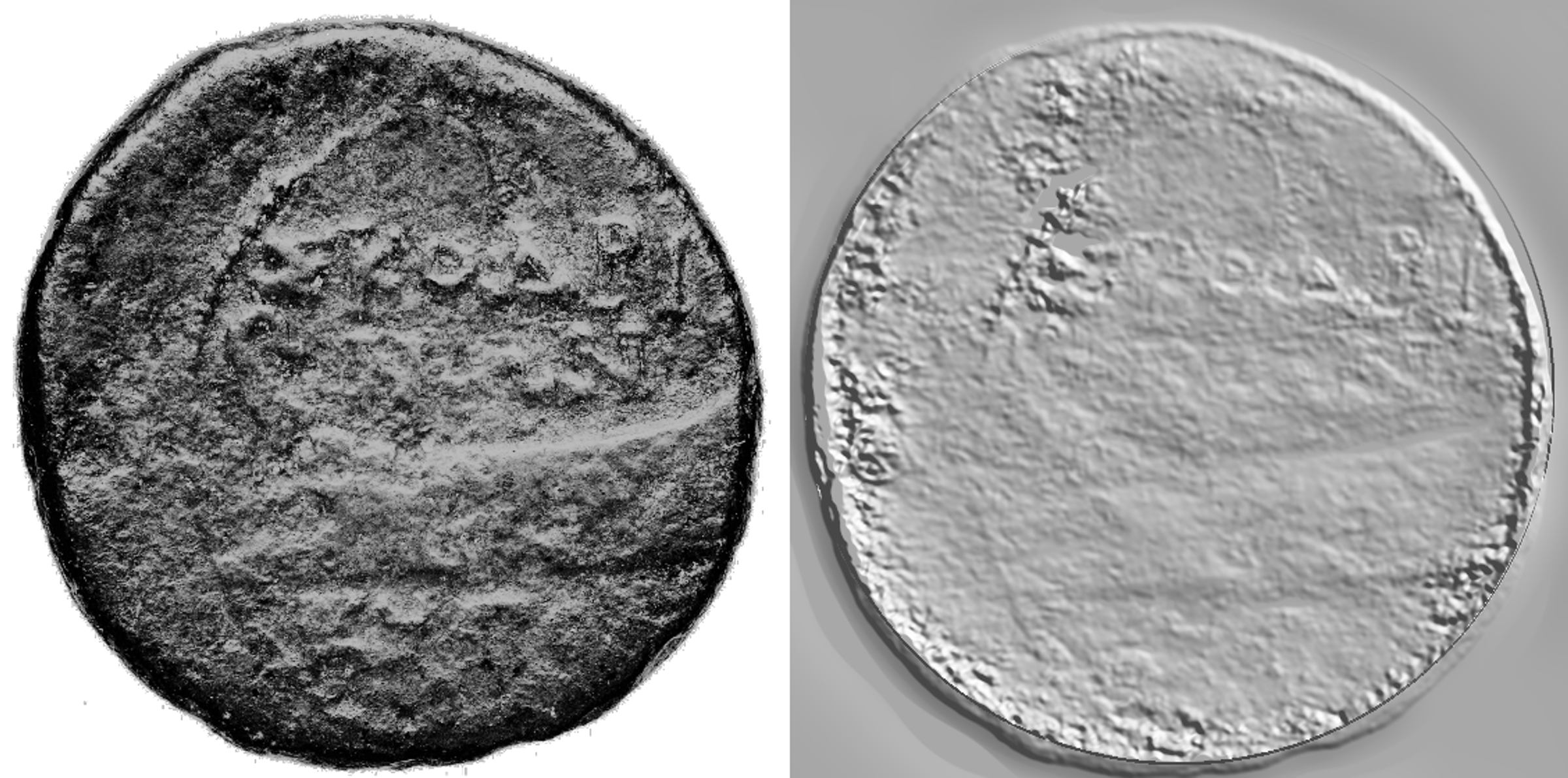
Civic coinage of Skodra, the second capital of the Illyrian state, with the legend ΣΚΟΔΡΙΝΩΝ — “of the Skodrans”. The obverse shows the head of Zeus, the reverse an Illyrian ship, the fast vessel with which the Illyrians ruled the eastern Adriatic coast.
The coinage of Skodra, like that of King Gentius from the same mint, ends in 168 BC, when Rome annexed the city after defeating Gentius. The specimen is heavily corroded, so the ship and letters read less clearly on the model; its diameter is not published and is estimated here from its weight.
The 3D model was made from two photographs of the specimen (obverse and reverse) in the collection of the Bibliothèque nationale de France. The relief height was derived from the shading in the photograph, so the model is a faithful drawing in three dimensions, not a measured survey of the coin. The photograph is applied to the model as its colour. For 3D printing, obverse and reverse were prepared as separate flat-backed plaques, enlarged 3:1, at true and at emphasised relief height.
Technical drawing
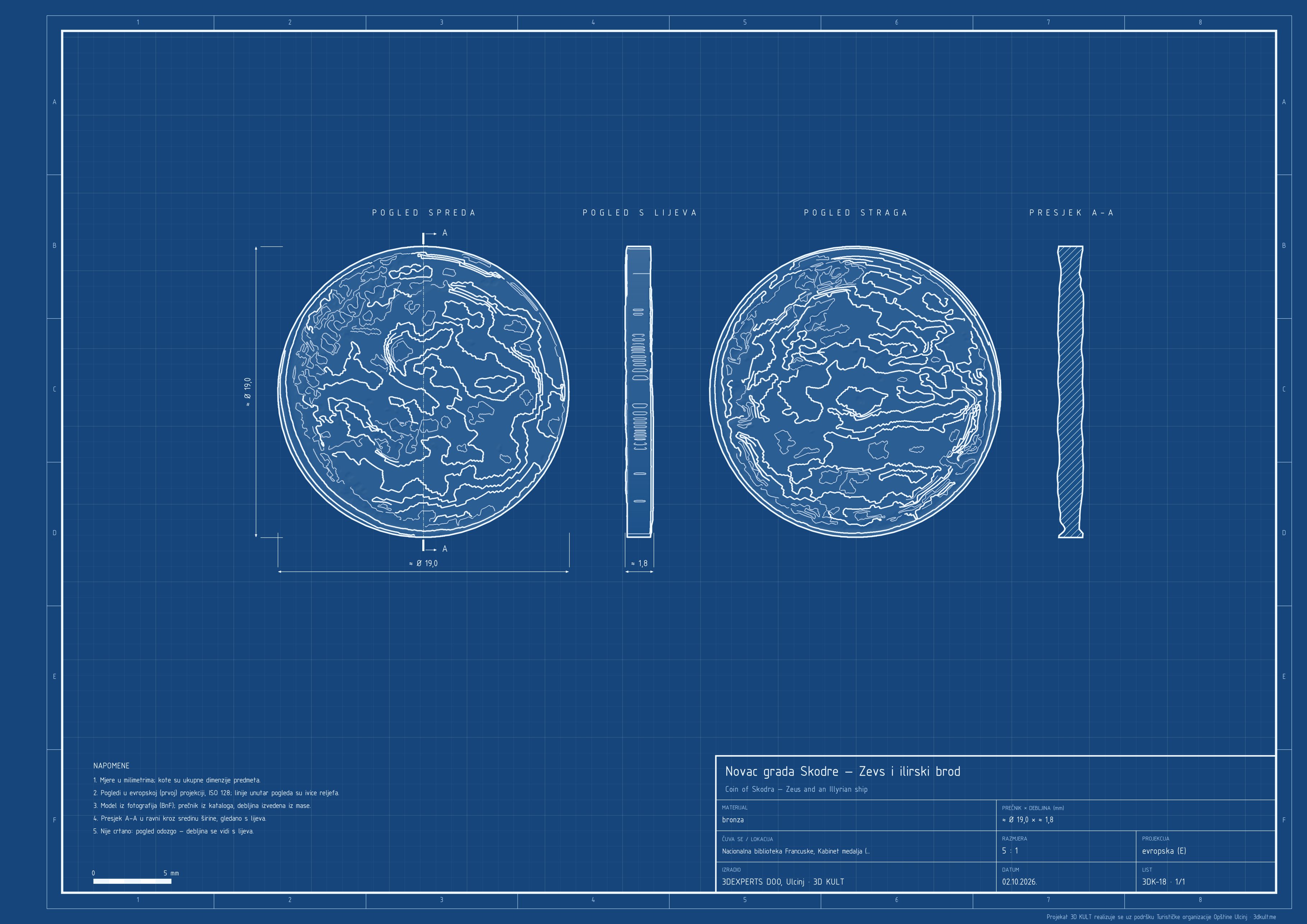 Open PDF (A3) ↓
Plates from the documentation
Literature and sources
- Fotografije: Bibliothèque nationale de France, Département des Monnaies, médailles et antiques — https://gallica.bnf.fr/ark:/12148/btv1b8572963g (javno vlasništvo).
- J. Wilkes, The Illyrians, Oxford 1992.