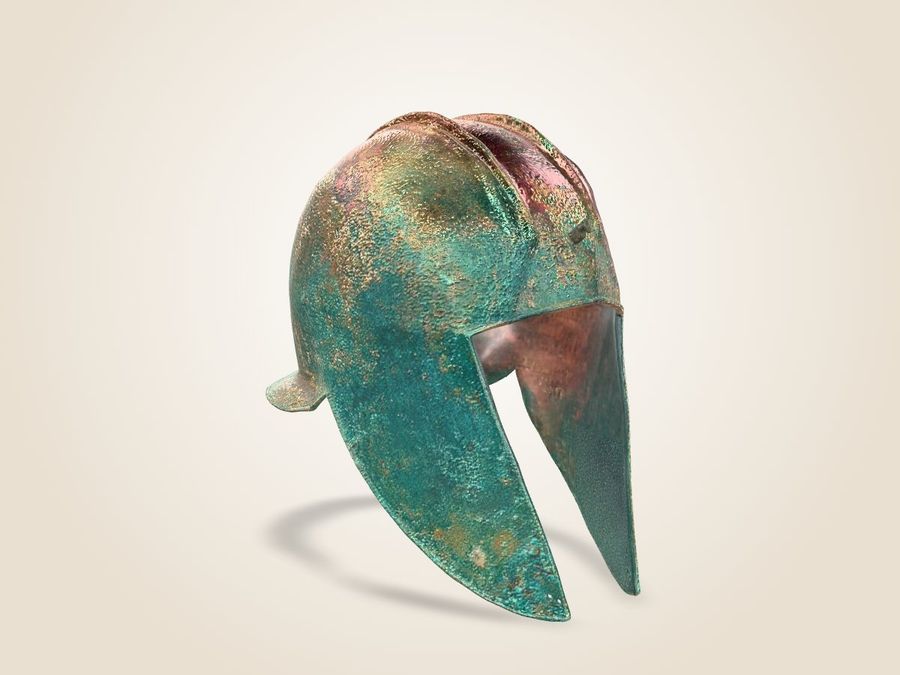
Illyrian-type helmet
Kaciga ilirskog tipa
Drag to rotate · scroll to zoomDrag to rotate · pinch to zoom
loads {mb} MBObjects that were not scanned but reconstructed: the Old Town as a 3D model from open spatial data and, from photographs, the figurine Diva Rumina of Ulcinj, an anthropomorphic slab figurine of fired clay and the oldest object in the collection, a gem with the head of Athena from the 4th–3rd century BC, a side of the 9th-century ciborium (National Museum in Belgrade), the plaque with the IHS monogram in the Old Town, coins of Illyrian kings and cities, of medieval Ulcinj and Svač and of the Roman Empire, and finally an Illyrian-type helmet as a sample. A reconstruction is not identical to the original: shape, ornament and dimensions may differ. An exact model will come from 3D scanning the original, and for the town from a drone or lidar survey.
Description
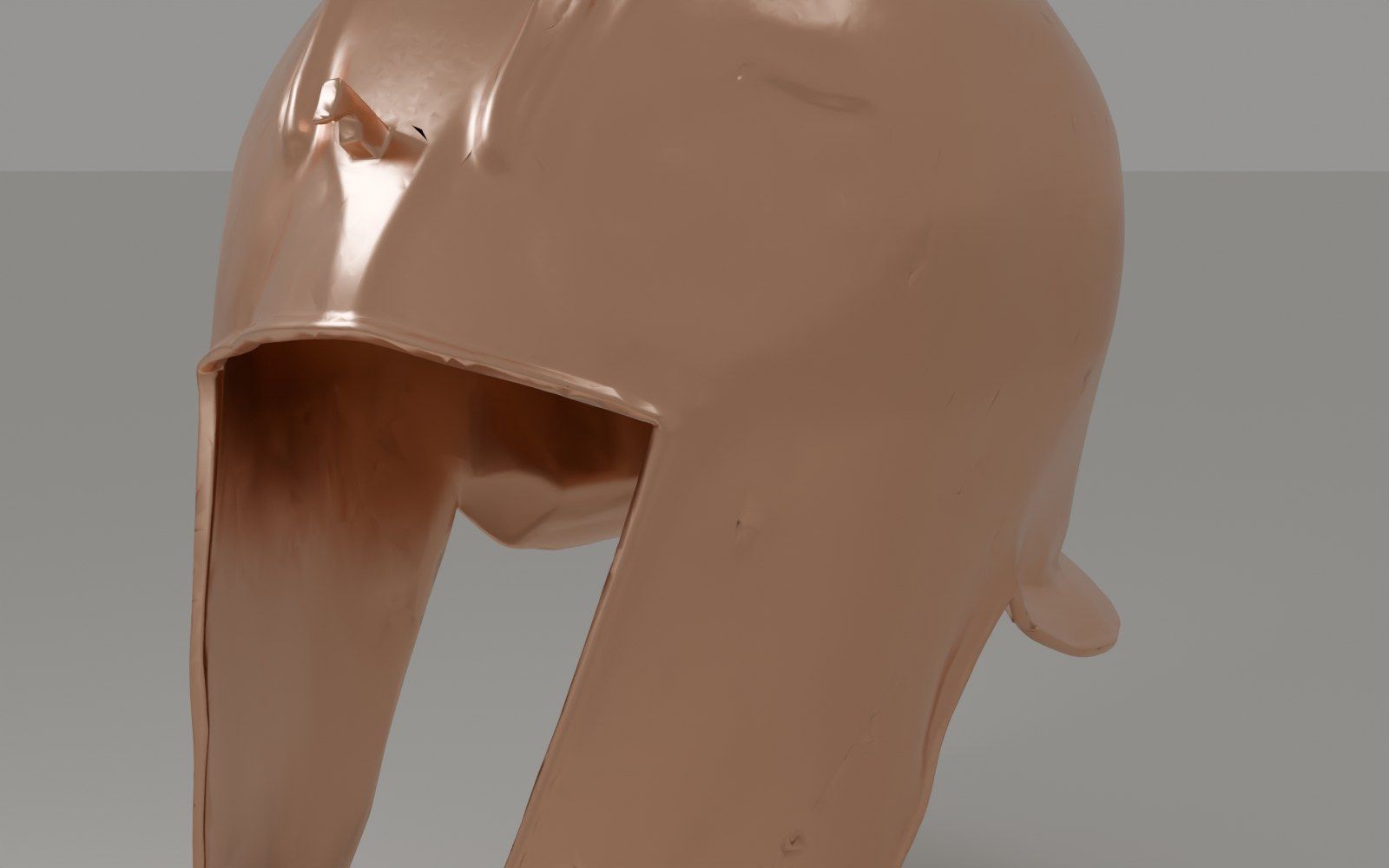
A bronze helmet of the Illyrian type — a form worn, broadly, from the 7th to the 4th century BC1: a rounded bowl with two ridges along the crown, cheek-pieces protecting the face and an open face without a nose-guard.
Six helmets of this type have been found in Montenegro: four in the ancient cemeteries of Budva, one in a warrior's grave at Kličevo near Nikšić and one in the river Zeta. They belong to the latest phase of the type's development, from the 6th to the 4th century BC, though they were probably used for longer. None of them comes from Ulcinj.2
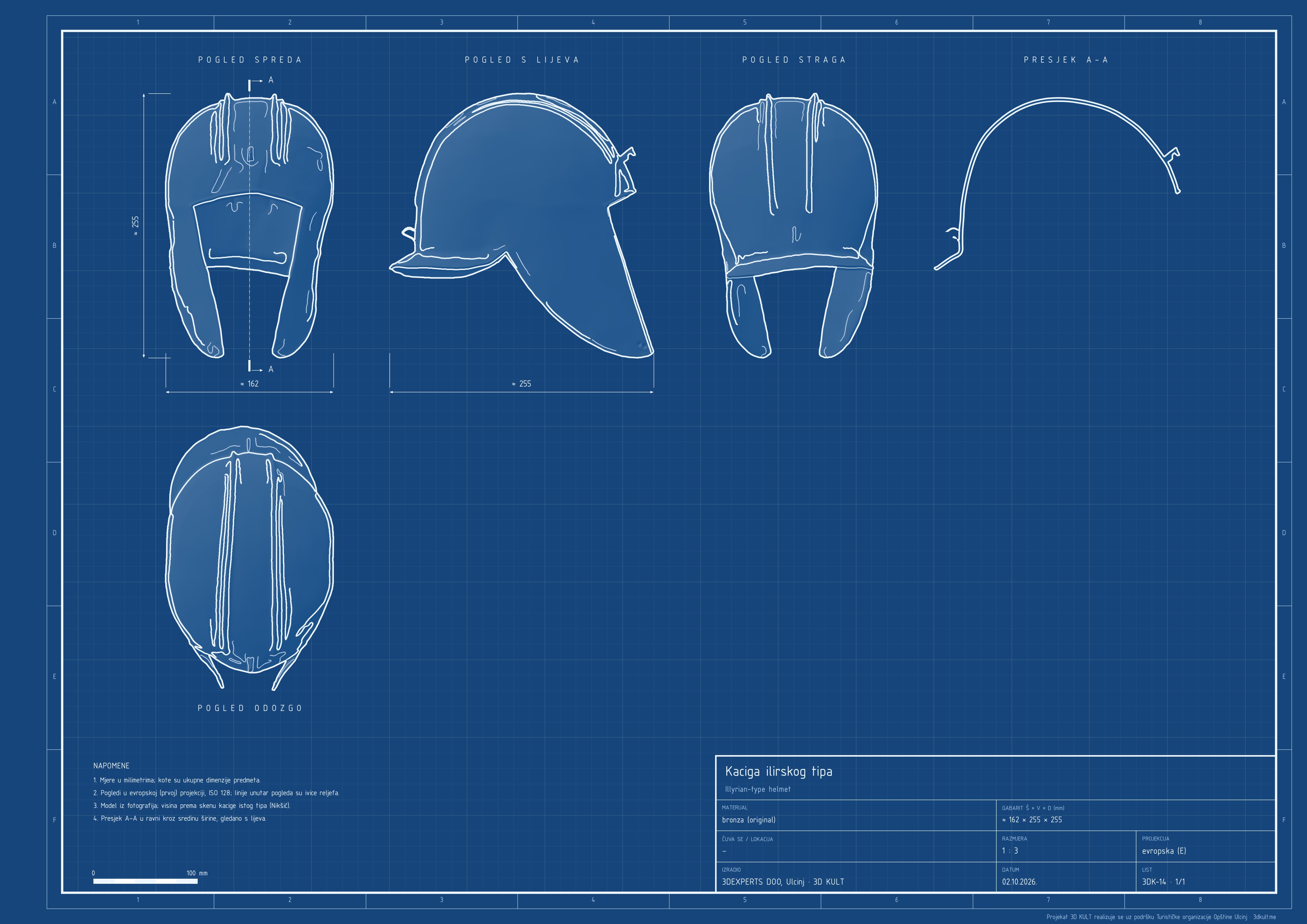
The model is not a copy of a specific find: it was made from photographs of one helmet of this type and serves as an illustration and a basis for a replica. Its height was set to 255 mm, after the 3D scan of a real helmet of the same type from Nikšić; at that height the model is narrower (width-to-length ratio 0.64 against 0.83), so it is not presented as a copy of it.
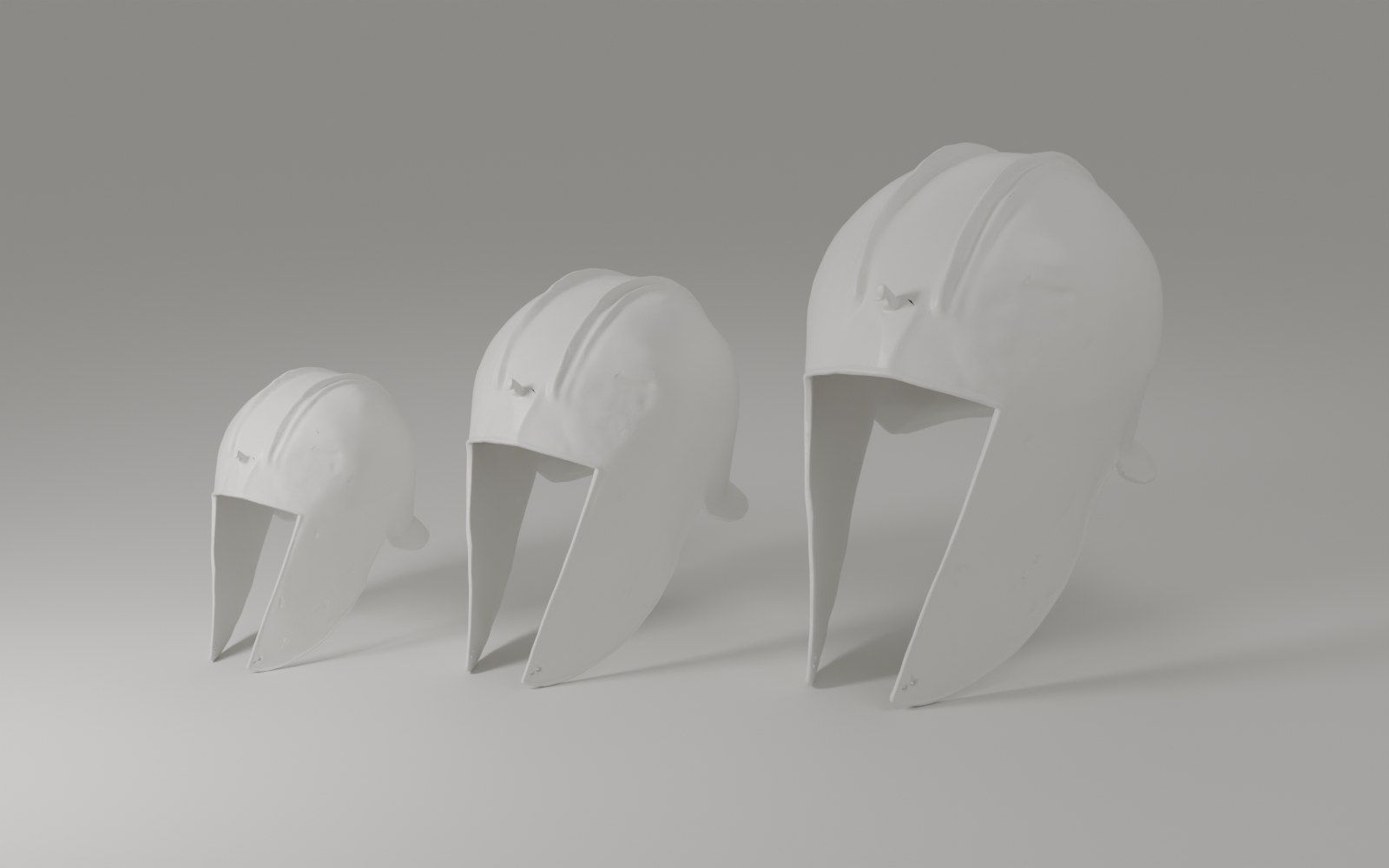
Measured on the model: average sheet thickness 2.9 mm, volume 316 cm³, surface 2,202 cm². Four helmets (110, 150, 200 and 255 mm) and eight stands were prepared for 3D printing.
Note (2)
- The name “Illyrian” is conventional: helmets of this form have been found both in Greece and in the western Balkans, and views differ on where the type originated. The 7th–4th century BC range is approximate. ↩
- CANU, Lexicon of the Archaeology of Montenegro, entry “Ilirski šljemovi” (M. Vujović): „Na tlu Crne Gore otkriveno je šest primjeraka koji pripadaju najkasnijoj razvojnoj fazi ove vrste naoružanja (od VI do IV v. p. n. e.), ali su vjerovatno korišćeni i duže. Četiri potiču iz antičkih nekropola Budve, jedan iz ratničkog groba u Kličevu, a jedan je otkriven u rijeci Zeti.“ (Six specimens have been found in Montenegro, belonging to the latest phase of development of this kind of armour (6th to 4th century BC), though they were probably used for longer. Four come from the ancient cemeteries of Budva, one from a warrior's grave at Kličevo, and one was found in the river Zeta.) Survey of the finds: M. Blečić-Kavur, „Ilirske kacige iz Crne Gore“, Nova antička Duklja VIII, 2017, 31–57. ↩
Technical drawing
 Open PDF (A3) ↓
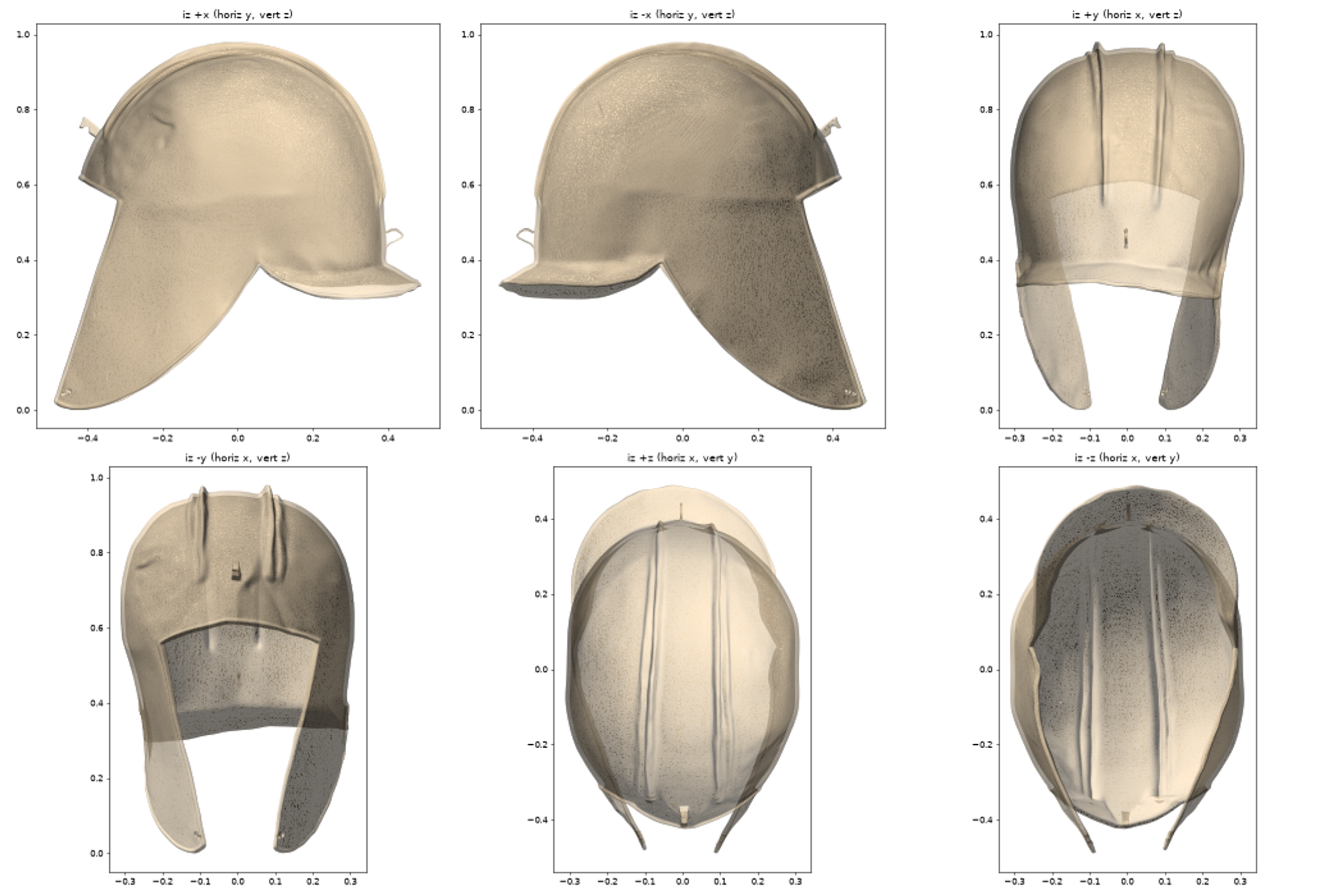
Plates from the documentation
Replicas for 3D printing
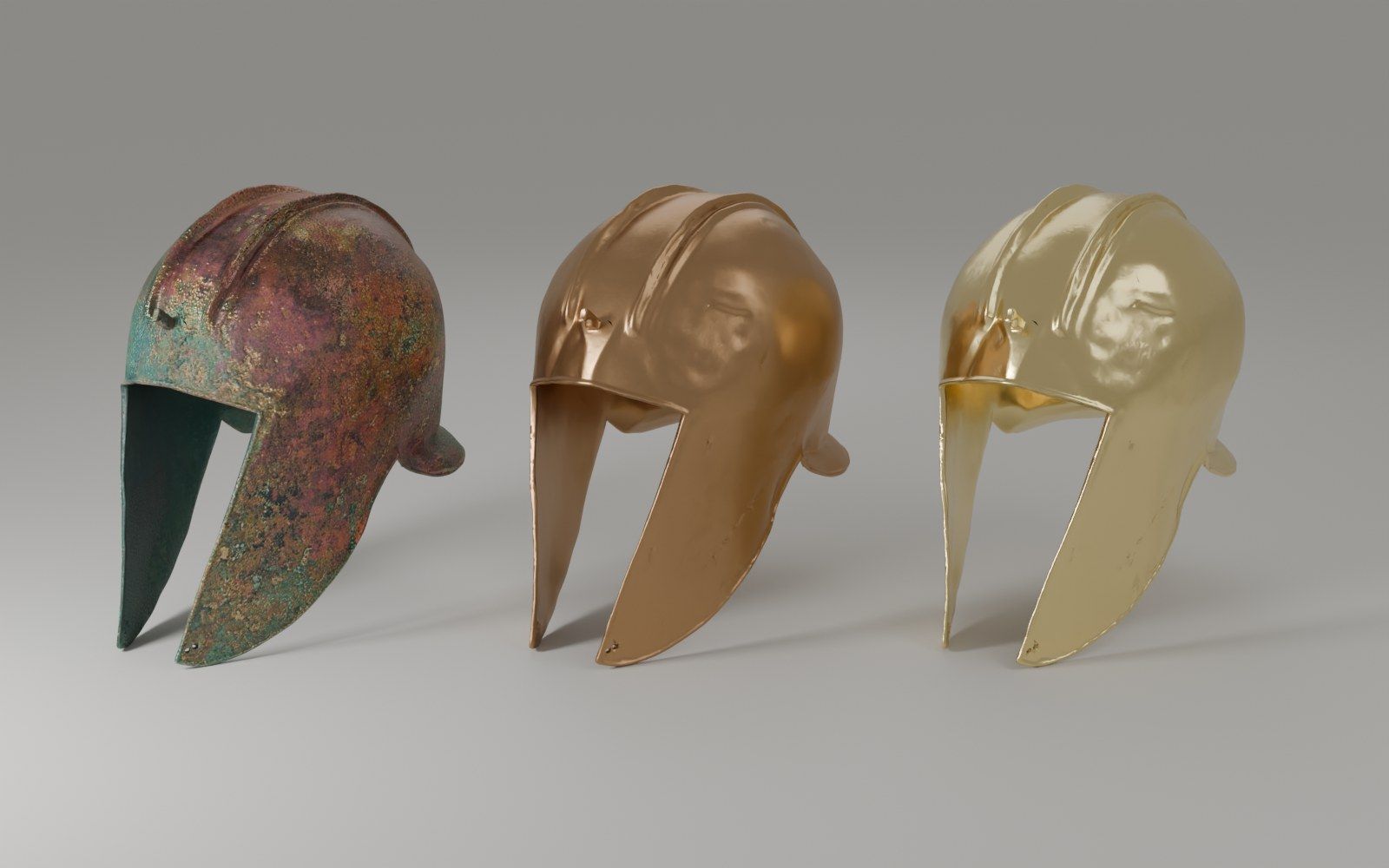
Renders of the 3D model in the proposed replica sizes and materials.
- Full colour of the original
- Full-colour gypsum: the replica carries the colour and texture of the 3D model itself. Closest to the look of the original.
- Metal: bronze, copper, brass, silver, iron
- For objects made of metal: coins in bronze, copper and brass, the silver stater in silver, the helmet and the axe in bronze, brass and iron.
The texts, measurements and reconstructions on this site are the analysis of the project implementer (3DExperts) and do not represent the views of the Tourist Organisation of Ulcinj, the Centre for Culture Ulcinj or the Museum of Ulcinj. The findings and interpretations are to be confirmed by the competent institutions and specialists engaged in this research.
Literature and sources (4)
- H. Pflug, „Illyrische Helme“, u: Antike Helme, RGZM Monographien 14, Mainz 1988.
- Mjera visine i poređenje: bronzana kaciga ilirskog tipa iz ratničkog groba u Kličevu, JU Muzeji i galerije Nikšić; 3D sken (Global Digital Heritage, 2025): sketchfab.com/3d-models/0a6b1afe04ee4ce4a097840af3ca9f33
- CANU, Leksikon arheologije Crne Gore, odrednica „Ilirski šljemovi“ (M. Vujović) — leks.canu.ac.me/web/arhcg.php?OID=6777
- M. Blečić-Kavur, „Ilirske kacige iz Crne Gore“, Nova antička Duklja VIII, 2017, 31–57.