Altar of Artemis Elaphabolos
Oltar Artemide Elafabolos
Drag to rotate · scroll to zoomDrag to rotate · pinch to zoom
loads {mb} MBDescription
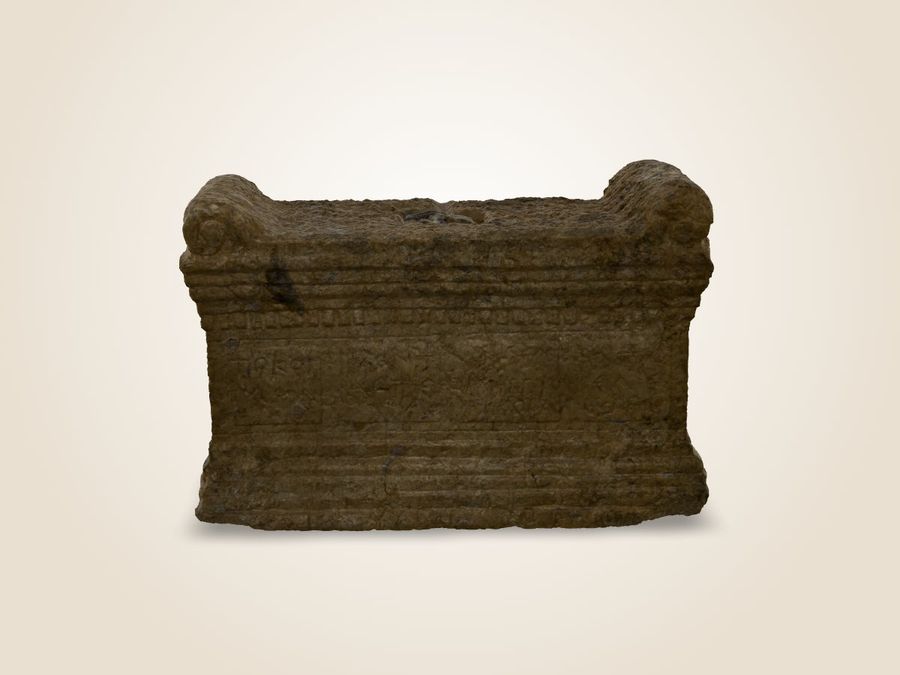
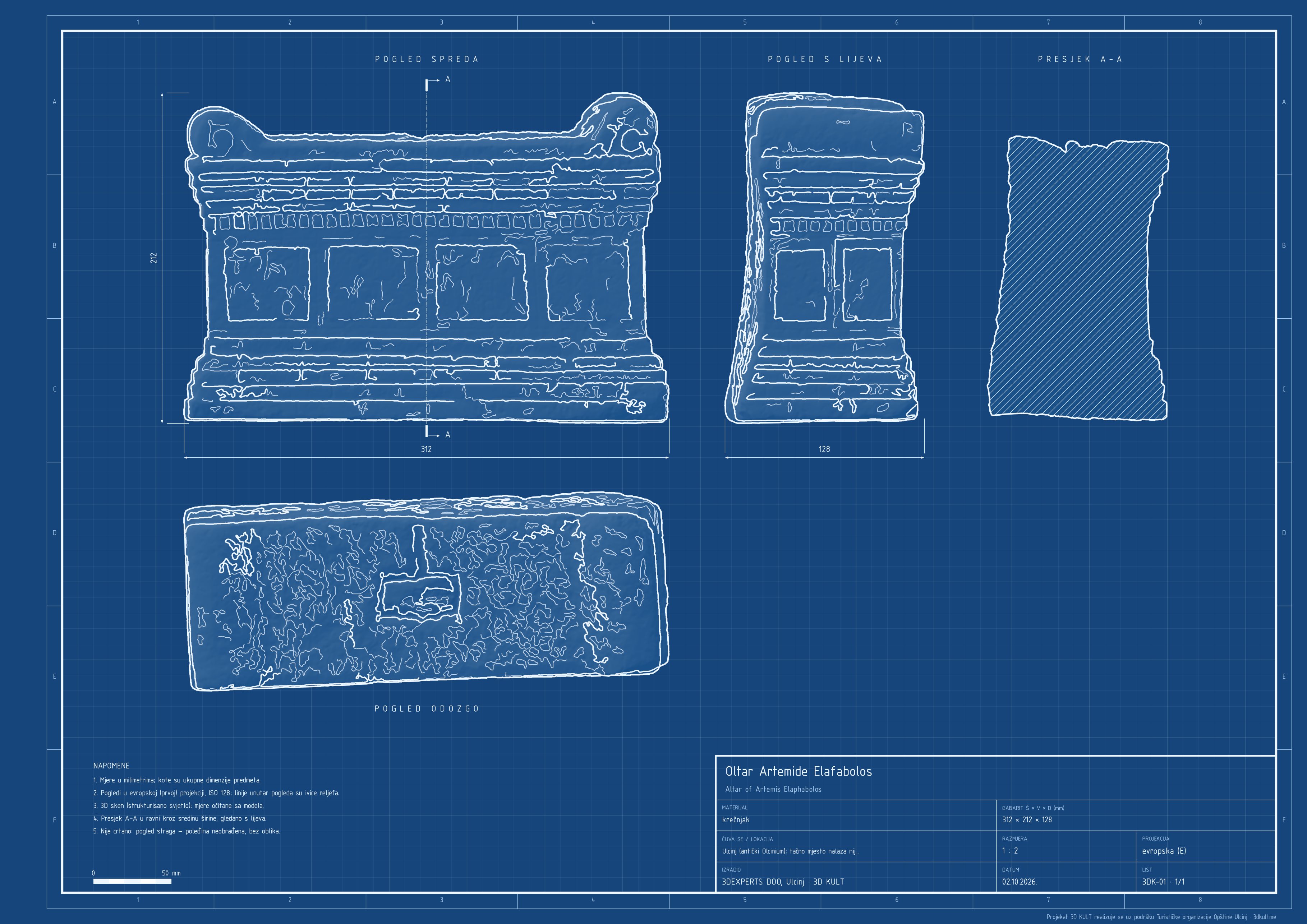
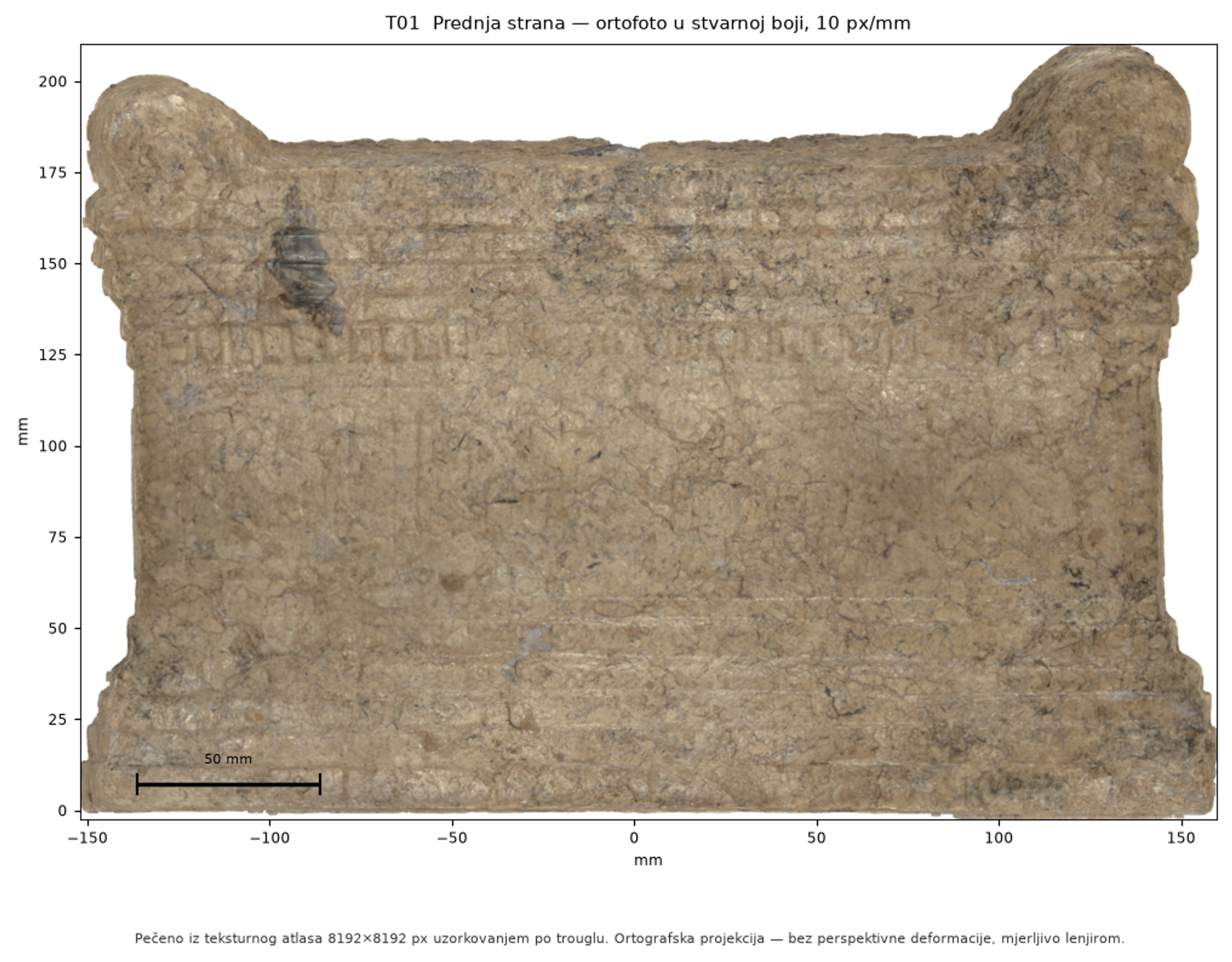
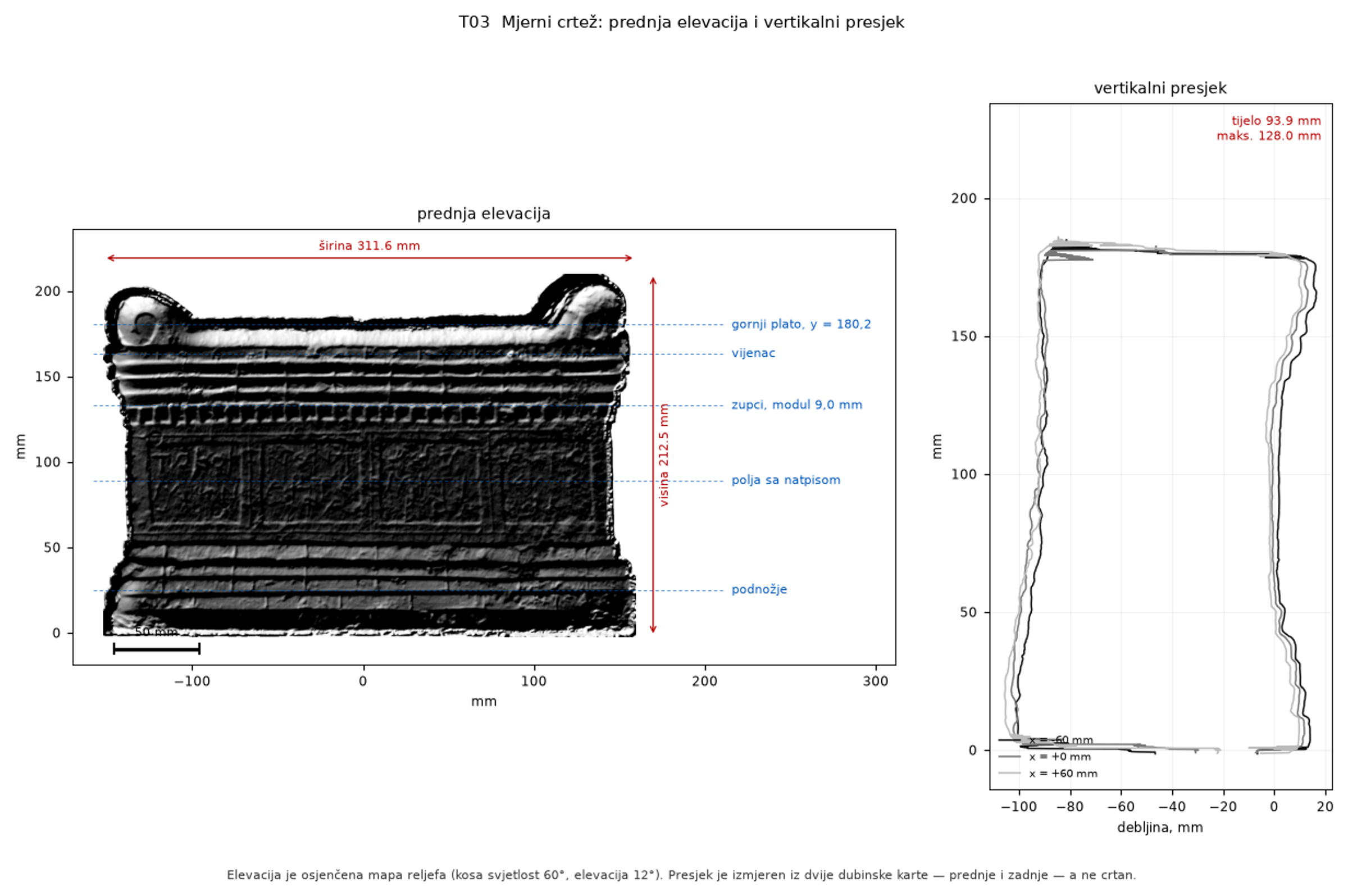
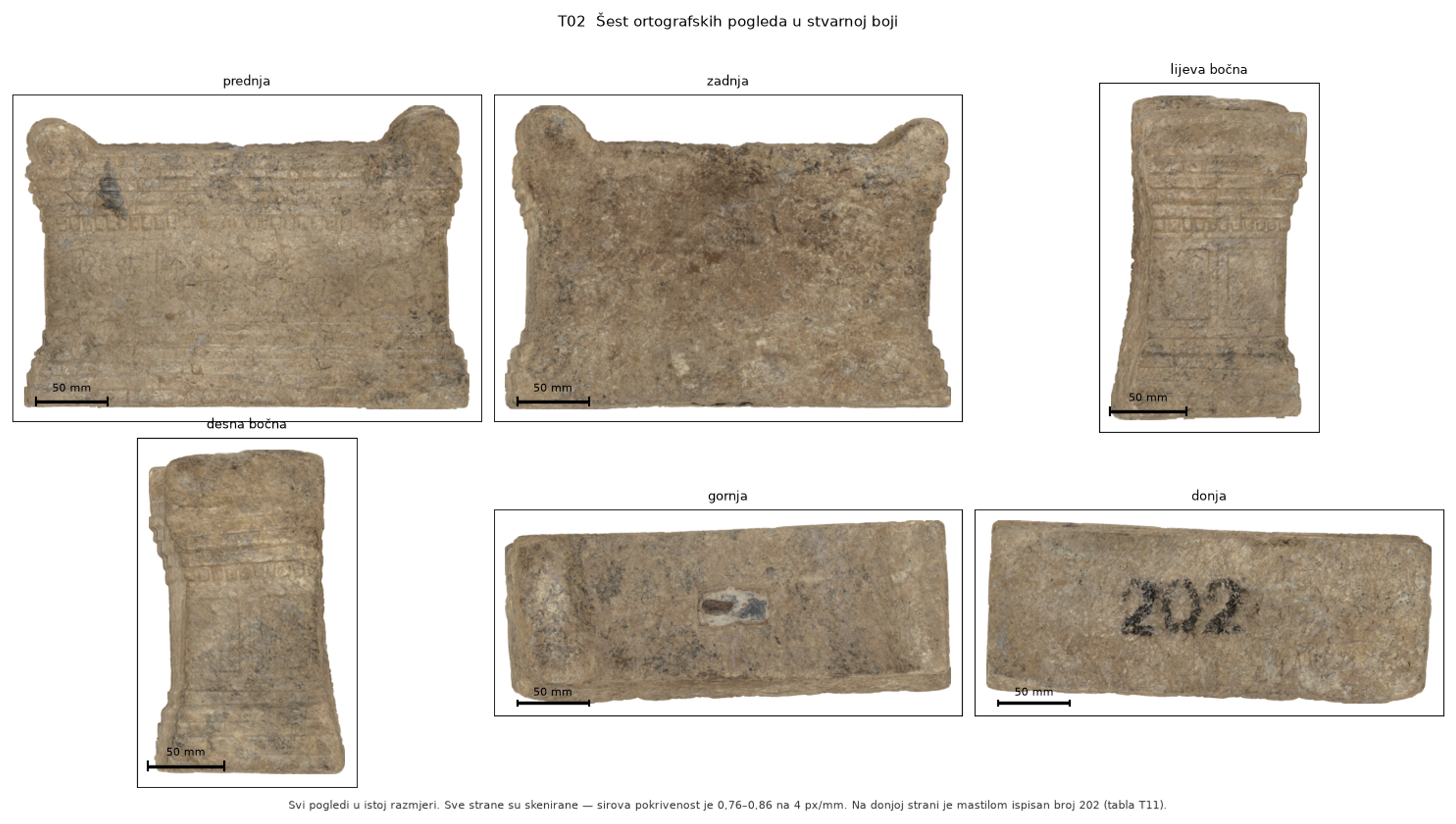
A limestone votive altar from ancient Olcinium. It is low and wide — 31 cm wide and 21 cm high — with two cylindrical pulvini on the crown and a cornice with a row of dentils.
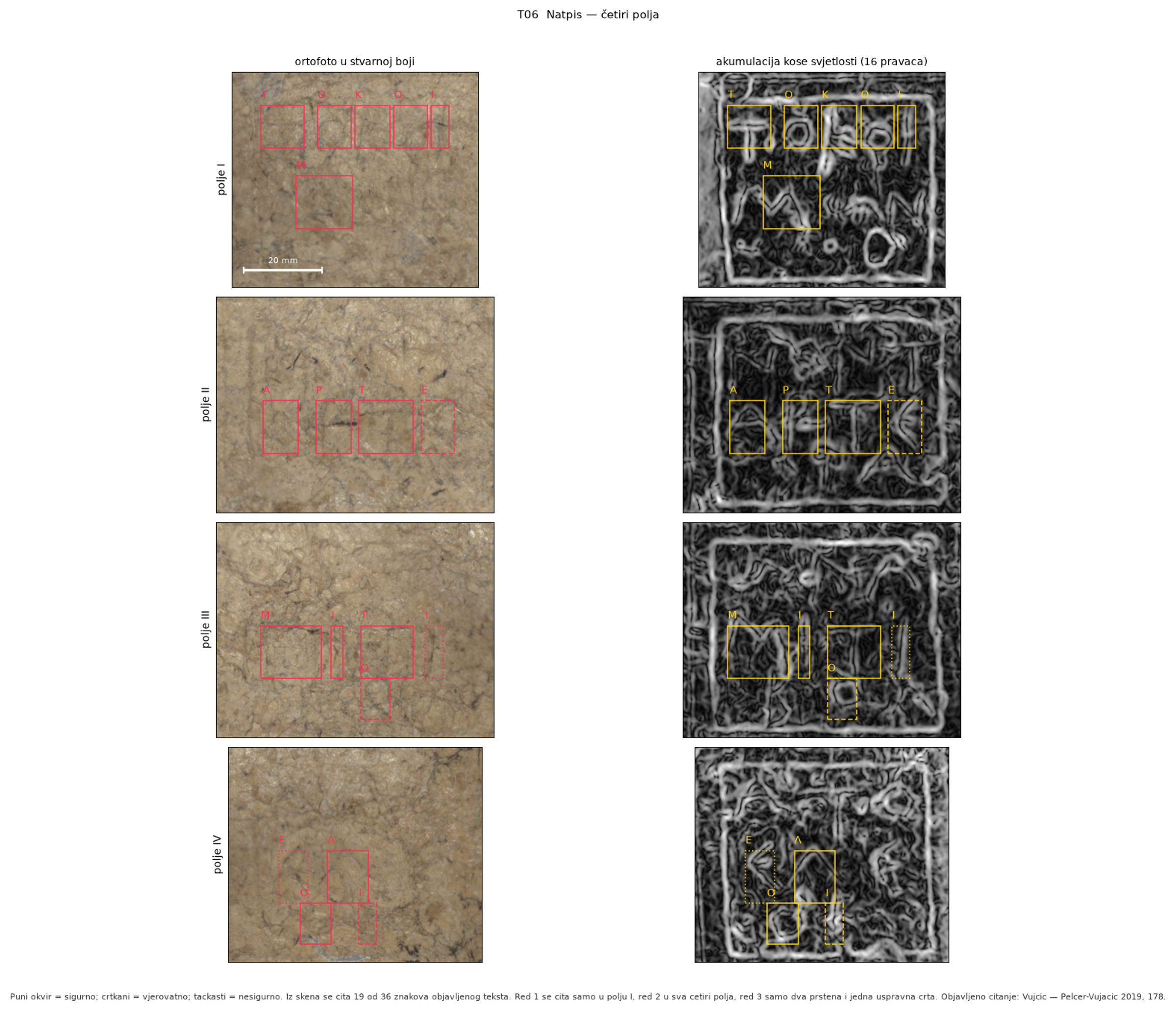
On the front, in four square panels, runs a three-line Greek inscription: τὸ κοινὸν τῶν λατόμων Ἀρτέμιτι Ἐλαφαβόλωι — “The association of stonecutters ⟨dedicated this⟩ to Artemis Elaphabolos, the deer-shooter.” There is no verb on the stone; that is the formula, not damage.
The dedicant is not a person but a trade association — the inscription names no individual. This makes the altar a document of the organisation of labour, not only of cult. Greek inscriptions are rare in southern Montenegro. If the dating to the 1st century BC holds, this is one of the earliest known attestations of a stonecutters’ association; the claim remains conditional until new evidence appears.
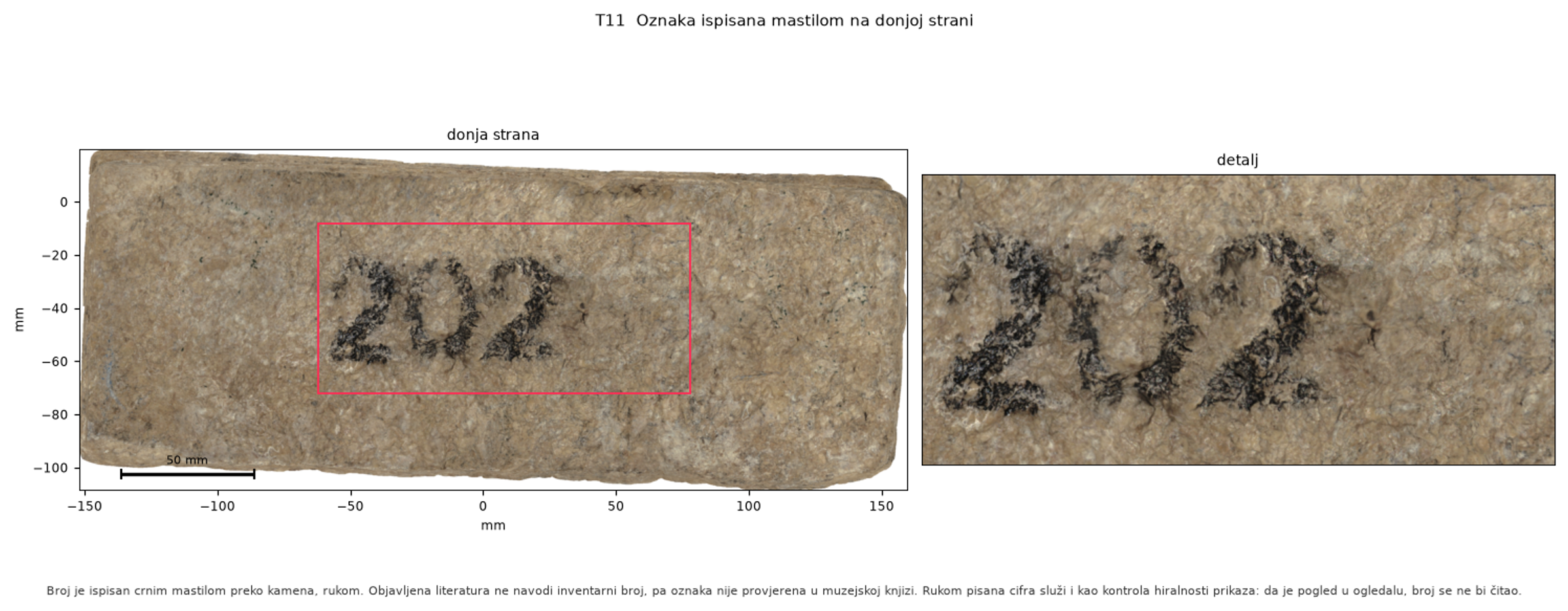
The true dimensions were measured on the 3D scan. The published “9.5 cm” is not the height but the thickness of the body (measured at 93.9 mm); the greatest depth, 128 mm, is at the cornice and base. The number 202 is written in black ink on the underside.
Technical drawing
 Open PDF (A3) ↓
Plates from the documentation

Literature and sources
- N. Vujčić, O. Pelcer-Vujačić, „Some notes on two Greek inscriptions from Montenegro“, Arheološki vestnik 70 (2019), 173–183 (oltar iz Ulcinja: 177–181). CC BY-NC-SA 4.0.
- P. Mijović, M. Kovačević, Gradovi i utvrđenja u Crnoj Gori, Beograd – Ulcinj 1975, 32 (prva objava).
- J. J. Martinović, Antički natpisi u Crnoj Gori, 2011, 284–285.
- Ph. Harland, „Dedication to Artemis Elaphabolos by an Association of Stonecutters“, Associations in the Greco-Roman World (mrežno izdanje, 2016); PHI 310744, AGRW 22073.